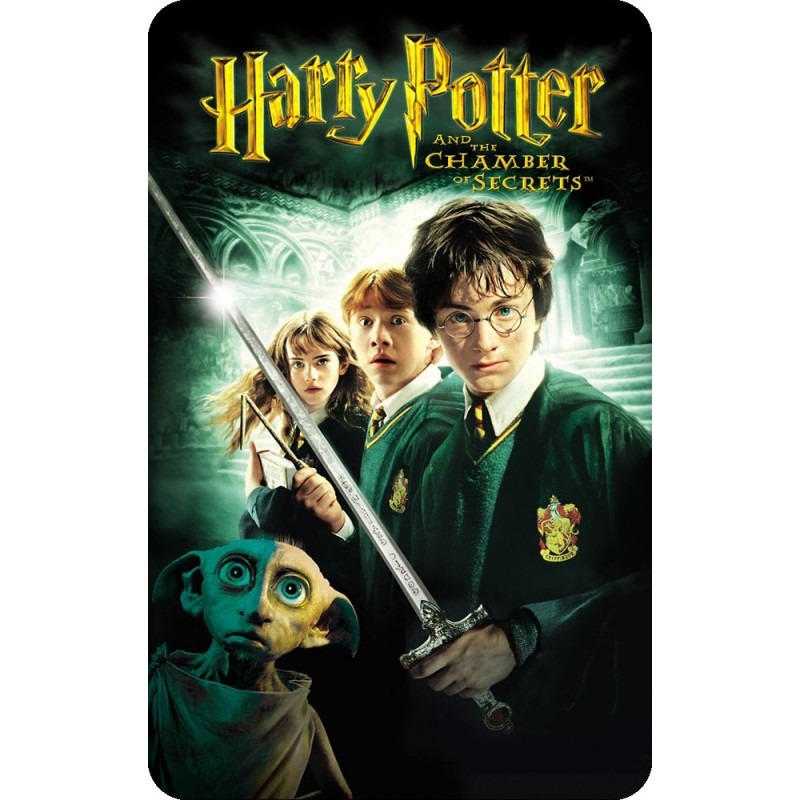
It was just over two years ago that I posted about the first Harry Potter film. Whoops. Lots has happened since then in the franchise – the critical and financial failure of the Fantastic Beasts films, leading to big question marks over their future and the announcement of a television remake of the books. There’s also been the open world video game, which had a lot of hype behind it but I haven’t really heard anything since. Maybe that’s on me. Anyway, we’re here to talk about the next film in the franchise, so let’s get to it.
Harry Potter and the Chamber of Secrets was released in 2002, following the hugely and globally successful first film, with Christopher Columbus still in the director’s chair. Visually, thematically, stylistically, it’s all very much a direct follow up to The Philosopher’s Stone. This is a good thing, right? Wrong. It’s really hard to talk about this film in its own right, because everything other than the plot is identical to the first one, and even the plot follows the same broad strokes – what’s going on, and what does it have to do with Voldemort? Honestly, the first two films in the series just feel like an extended two-part television episode. In a way, it’s why I appreciate the next three films in the series beyond their inherent quality level, because each of them brings in a new director with their own ideas and art direction.
The practical effects are as strong as ever, especially for the giant spider, Aragog.
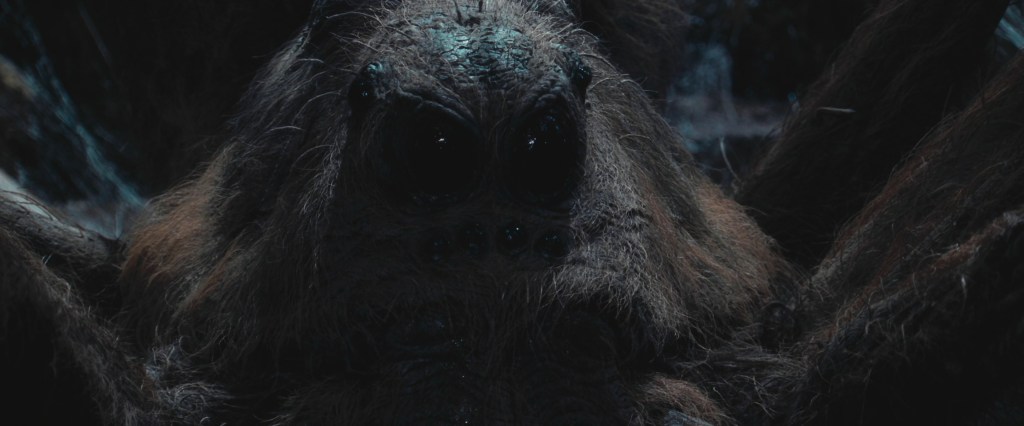
Isn’t he wonderful? I don’t even like spiders. The mandrakes are great too, it’s so much nicer when you can tell that the actors can physically see and feel what they’re reacting too, especially child actors. Look at how much better the basilisk looks when it’s a real, physical thing, as opposed to CGI. They’re different angles, annoyingly, but you get the picture (haha).
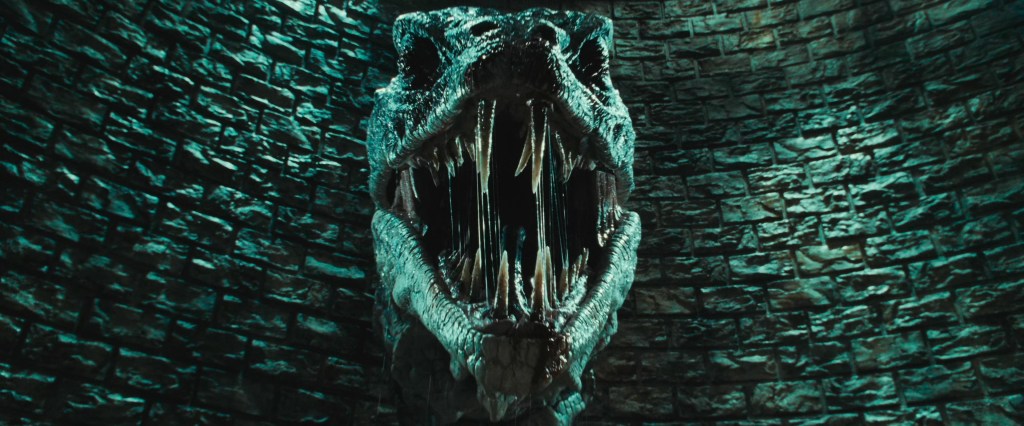
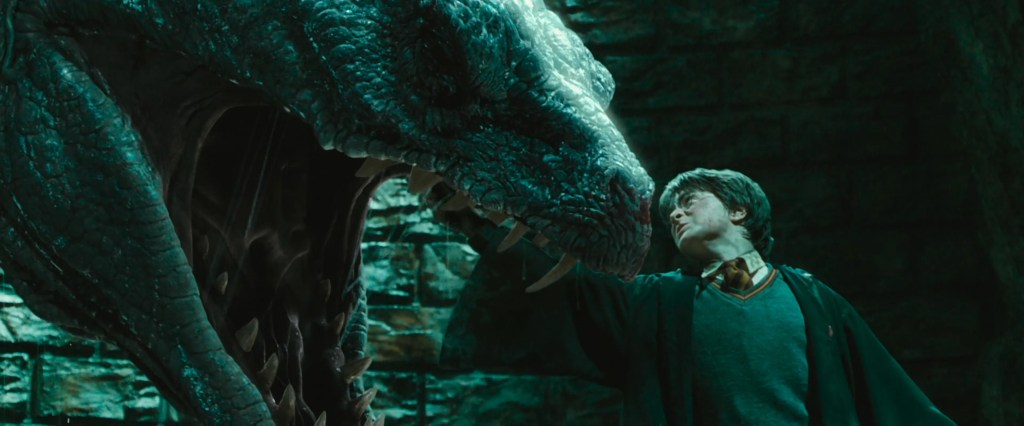
Watching the scene again, it just looks like Harry is slashing at air. I know that there was still a long way to go with visual effects, but why use a giant, moving model of a basilisk only some of the time? I can understand for the wide shots, but in all the close-ups with Harry using the sword, why don’t all of them feature the animatronic? Its mouth moves and everything! Don’t get me wrong, the visual effects are much stronger than the first film, but this particular scene just feels so inconsistent.
The casting is continuously strong, bringing in some of the most talented names that the British Isles have to offer, on top of an already loaded cast. Two of my very favourites are Kenneth Branagh as Gilderoy Lockhart and Christian Coulson as Voldemort, both for their extravagant and overblown portrayals of their characters. Lockhart looks very little like he was described in the book, but Branagh captures his delusional arrogance so well, the veiled cunning behind the gormless and vapid expressions. Speaking of arrogance, I’m still disappointed that this was Coulson’s only appearance in the franchise. If The Half-Blood Prince had any kind of spine at all, he would have been brought back for the flashback scenes of Tom Riddle as a young man, culminating in his final visit to Hogwarts before Tom Riddle officially disappeared and Voldemort was born. He was hammy and over the top in the very best way, chewing his words before spitting them out at Harry in that climactic scene in the chamber itself (spoilers).
As many times as I’ve seen this film, it’s quite telling that I’m finding it hard to really say anything of note. It’s all fine, but it’s never really anything more than that. It lacks ambition, which is frequently the fault of the studio’s handling of the franchise. The books are hardly great works of literature, and other than the core concept of ‘wizard school’, they never really go in a particularly interesting or surprising direction. The core concept of ‘something mysterious is going on that will not be solved until two weeks before the end of the school year in a climactic stand-off’ is essentially the plot of every single book. Of course, there’s a lot of interesting stuff going on beneath the surface and in side-plots, but very few of these were translated to the films. Maybe the series will do a better job of this, with the key advantage of having more time, but we’ll see.
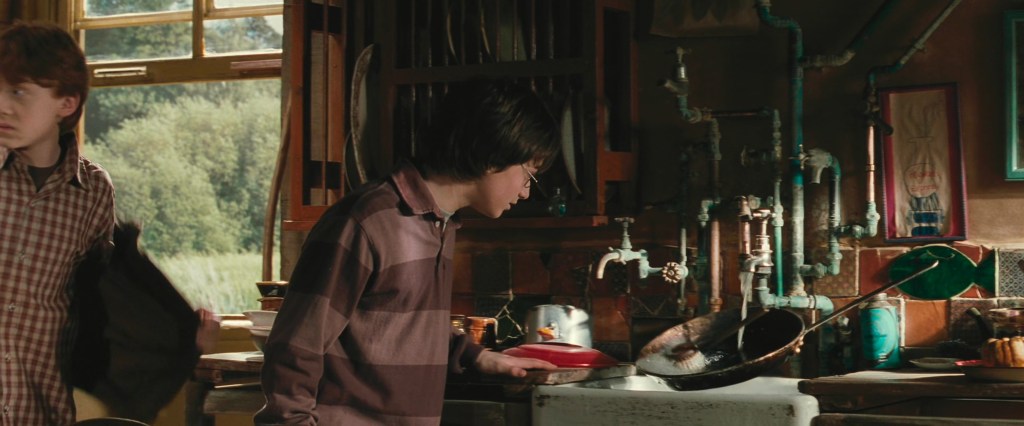
One thing that I do enjoy, that we so rarely see in a film about about magic and magicians, is everyday magic just happening. The introduction of the Weasley’s house is Harry’s first introduction to magical life outside of Hogwarts, and they do a great job of capturing his wonder. Of course, they have to spell it out with his cheesy little “I love magic” line, but Daniel Radcliffe’s earnestness really helps sell the line.
My main issue with this film is that there’s nothing more here, nothing particularly interesting that makes it stand out. The plot ambles along with no real interesting twists or turns along the way (maybe that’s because I’ve seen it so much though). It’s old and dusty, the charm of the original already wearing pretty thin. Thank goodness for the visual shake-up in the next film, not only does the style change but so do some of the sets, expanding the castle and the grounds to feel more sprawling and mysterious. It’s still very watchable, as are all of the films in this series, I’m just glad they started to take it in a different direction after this.

 The Herbshank Blogdemption