First Impressions – Fallout

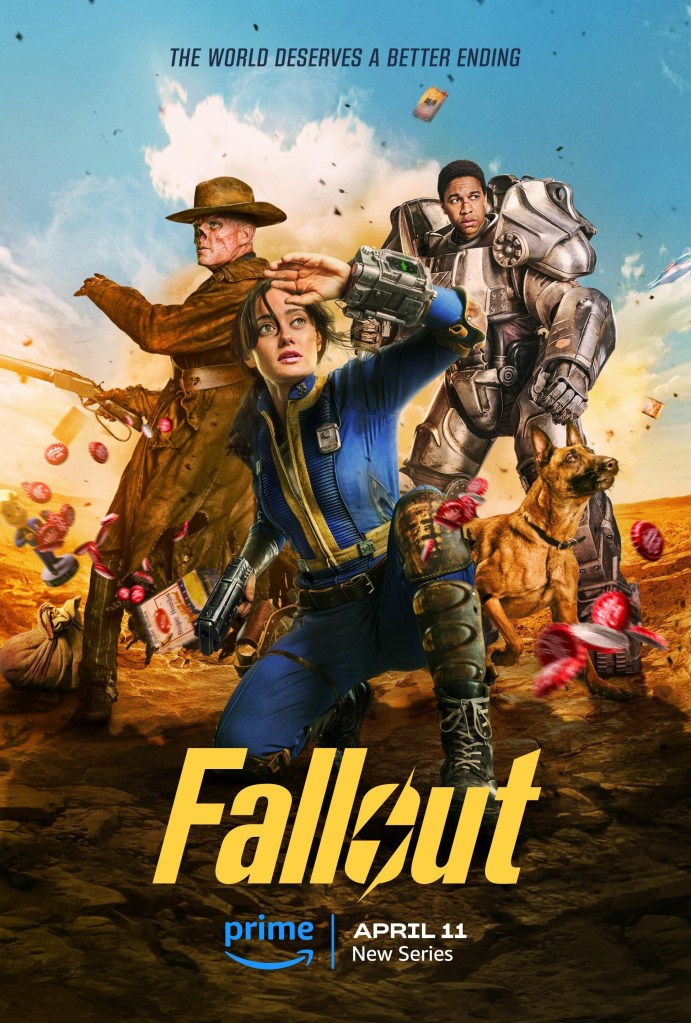
Continuing my series of only looking at the first episode of a show, we move on now to Fallout, which came out just a few weeks ago. Based off the video game series of the same name (which I’ve never played), it’s very much a post-apocalyptic story that hearkens back to the old sci-fi traditions and stories of the mid-twentieth century. Starring Ella Purnell, Aaron Moten and the always delightful Walton Goggins, the show follows three people over two hundred years after nuclear war has ravaged the Earth.

It was a bold choice to launch into a dual narrative (three narratives, if the last five minutes of the episode are anything to go by) and I think this is probably the weakest part of the episode. The prologue is stunning and gripped me instantly. It launches us into this post-war but alternative world with a TV cowboy entertaining a birthday party under the looming threat of a nuclear holocaust. After that, we’re greeted with a huge jump in time to a bunker with kooky characters, weird outfits and a shade too many incest jokes, if truth be told (I watched the first half with my parents before they decided it probably wasn’t for them). It’s weird and fun in a way that drew me right in, setting up some really interesting characters and concepts. However, we’re abruptly launched into a scene that’s far less fun and colourful, in the outside world that’s been ravaged by the nuclear fallout. It feels like a completely different show within the first episode, and while players of the games may think this works well, I thought it was just a little too jarring. Personal preference perhaps, but I’d have preferred an entire episode focussing on Lucy MacLean before we start to learn about other characters. That’s not to say the other narrative doesn’t hold promise, but it certainly hasn’t left the same impression of that whirlwind first half an episode. However, the epilogue of the episode has certainly piqued my interest again.

Crucially for an adaptation like this, I didn’t feel particularly lost by any of the plot points or jargon. It’s a very tricky thing for a first episode to do when it’s based off an existing piece of media – how to entice people new to the franchise without dumbing it down too much for old hats. It doesn’t feel like a lot of adaptations, where a lot of the scenes are akin to an inside joke and you just end up sitting there not entirely sure whether you should be laughing or not. Everything feels very organic here, we get lots of nice establishing shots in the first part showing us around the underground bunker. Our self-narrated introduction to Lucy is a nicely done touch of exposition too, where she’s talking herself up to justify why she should be chosen for marriage. Not only do we get a glimpse into her world, we also get a glimpse into the world. It’s a really well delivered set up to the show.

As you’d hope for in a show based on what I believe to be a fairly open-world, or at least open-ended, video game, there’s no telling where we’ll end up going over the next few episodes, or indeed across the possible seasons to come. We get very neat introductions to who I’m sure will end up being the three main protagonists – Purnell’s Lucy, Moten’s Maximus and Goggins’s Cooper Howard. Of these three, and as I’ve already said, Lucy’s is the most well-rounded by far, and Cooper’s adds a nice dollop of mystery to the whole affair – how does a handsome cowboy end up still alive 219 years later, sans nose?

It feels like a crime that I’ve barely focussed on that prologue, but that’s because I could write another thousand words on it. I’ll try to restrain myself though. It’s a truly fantastic introduction to the show and hooks you in instantly. Line, sinker and everything else for that matter. It sets the scene for the rest of the action too, hearing and seeing the fears of a nuclear war and the reactions to the prospect. These range from lack of care, to wilful ignorance, to outright indignation at being forced to do your job with the end of the world nigh. You get to see the devastation and the desperation that permeates the rest of the episode, with one family disappearing down an underground bunker and another father being beaten for trying to follow. The image of Cooper throwing his daughter onto his horse and trying to outrun a mushroom cloud is somewhat haunting and helps to illustrate the sheer scale of what has happened. It’s an effective contrast of the development of humanity too, the overlap of the old world into the new.

On a final note, I really really really really HATE when all the episodes from a new series are released all at once. I fully and firmly believe that they completely destroy the majority of hype and interest that a new show can generate. Fallout first came out on the 10th April, and I can’t remember anyone really talking about it since about four days after that. Of course, here I am, but I’m sensible. Comparing the interest in any show to Attack on Titan (THE show which has launched anime back into the mainstream) is unfair, as that has perhaps been the most anticipated and talked about show in the last decade, but can you imagine if the final season had all come out in one go? You’d have a very clear divide in the binge watchers and the people who want to take their time, and various subsections within that. No one on this planet, other than the initial binge watchers, will be on the same wavelength. What’s Eren up to? Couldn’t tell you, mate, I watched it all three months ago. Think he’s a giant bone man. Spoilers, sorry. Wasn’t it wild when *that* happened though? Oh, you haven’t seen that bit. Oops.

It’s my belief that a part of the enjoyment of any show, or piece of media really, is the shared experience. Yes, you could make a pledge to watch it at a certain time with a certain group in order to mimic that weekly release schedule that seems to be dying a painful death, but I just can’t see how that benefits anyone. The anticipation of waiting two months from the first episode to that last would still be building here if they followed the weekly release timetable, but alas. It seems that I’m going to have to carry on the tiresome routine of asking a friend if they’ve seen said show, to asking how far in they are, to one of us trying to recall when they watched the most recent episode that both of us have watched and what happened in it. I’m tired.
Lady Bird

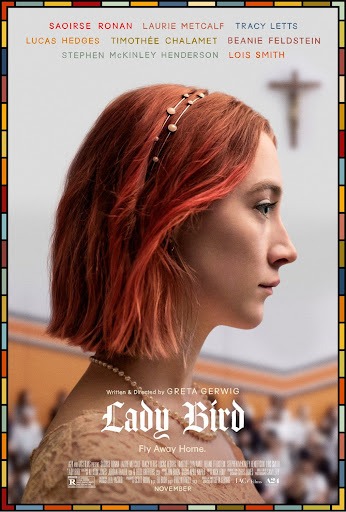
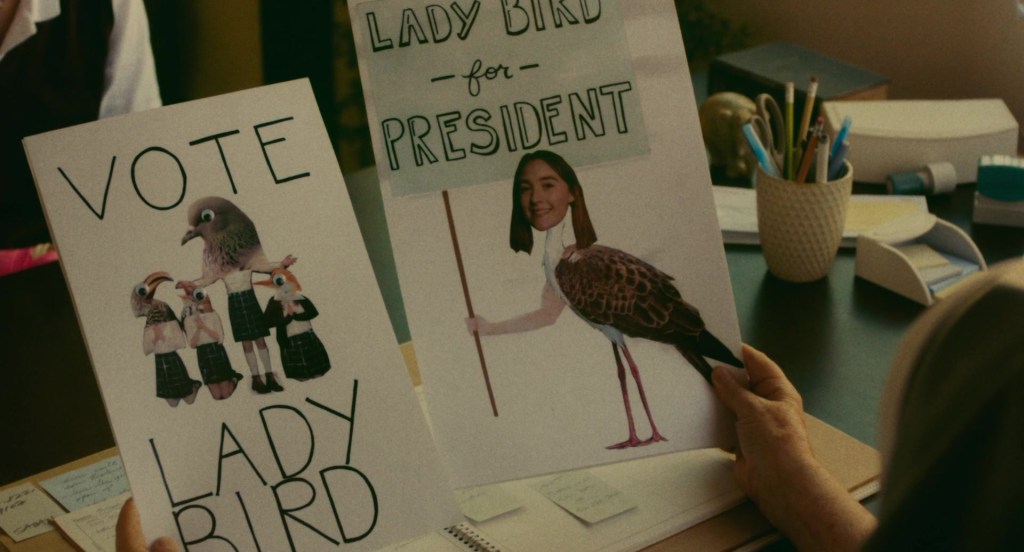
No pressure, to myself that is, but I think this is probably my favourite film, so I really hope I do it justice. I remember taking my sister to watch this at the cinema all the way back in 2018 and when we came out, we both knew it was a special film. I love coming of age, slice of life type films and Lady Bird fits into that template perfectly. Set during 2002 and 2003 in Sacramento, California (where director Greta Gerwig was born, more on that later), the film follows the titular Lady Bird (Christine) as she navigates her final year of high school.
Anyone who has even been near an English degree will have heard of Roland Barthes’s essay ‘The Death of the Author’. He argues that the biography and external context surrounding the author’s life and intention for writing something is ultimately irrelevant, it’s all about the reader’s interpretation and understanding. Barthes is wrong. I’ve simplified his argument so it’s easier to make my point (why doesn’t everyone do this?), but criticism is something multi-faceted and every-changing, so to reduce it down to ‘author irrelevant’ is ridiculously reductionist. No, we shouldn’t take the author’s word and intention as gospel, but when Gerwig was born and raised in Sacramento just a few years before the film was set, how can we ignore that? Lady Bird’s essay for her university applications is about Sacramento, and is even referred to as a love letter to the city. Lady Bird doesn’t intend it to be, but is told that it reads like love. While I don’t feel that the film is an autobiographical bildungsroman per se, it is clear to me that the film is a love letter to Sacramento, to the years of adolescence where we struggle more than ever to understand how we fit into the world. How better to illustrate that than a young woman who desperately wants to leave the place that she grew up, while also being deeply intwined with the people and roots of that place?
So much of the film is about Lady Bird’s identity, of her discovering how she fits into the world. Her name is chosen by herself, at least partly in defiance to a mother who criticises her at every turn. She experiments with different aspects of her personality throughout the film, from trying out the theatre to trying out being ‘cool’. The real Lady Bird, the real Christine, lies somewhere within this spectrum, something which she begins to discover at the end of the film. She realises that she wants to be with Julie instead of her new cool friends for Prom. She realises that moving to the other side of the continent brings a loneliness that she’s never had to confront before. She realises that despite everything, she appreciates what her mother, Marion, has done for her, even throughout their strained relationship on screen.


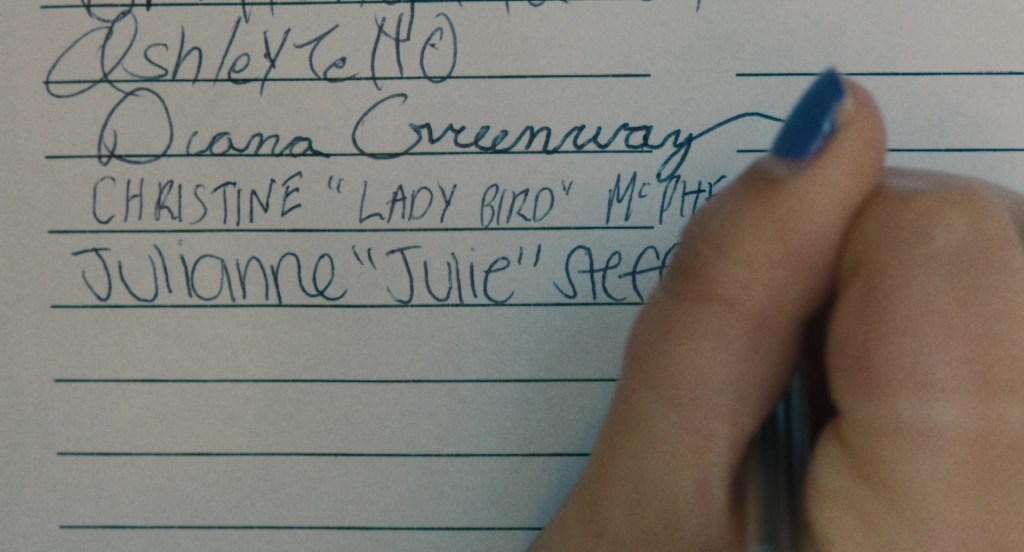
Unlike other commentators, I wouldn’t describe Lady Bird as selfish or self-absorbed, but she certainly behaves like it at time. At the beginning of the film, she signs her name as “Christine ‘Lady Bird’ McPherson for the school play, and then criticises her friend for putting “Julie” in quote marks as it it’s a shortened version of Julianne. It’s not the same, Lady Bird says, but why can’t it be? Lady Bird is not the only person who chooses to go by a different name from their birth certificate, but she wants to be. Throughout the film, she fluctuates between wanting to stand out and wanting to fit in. She wants to be seen and heard, to be admired in some ways, but she also wants to settle down with the cool kids and act like she doesn’t have a phone out of choice, not because her family can’t afford one. Yes, Kyle, I’m looking at you. You may have fooled everyone else when you called Lady Bird ‘good girl’ for not owning a government tracking device (mobile phone), but you haven’t fooled me. Timothée is as good as ever though; it took me several films he was in to see past the smug and edgy façade that he plays so well.
She talks about how she’s from ‘the wrong side of the tracks’ and she asks her dad to drop her off away from the school. She doesn’t do this maliciously, but she doesn’t think of how this will look and sound to the people she cares about. She takes her parents and her family for granted slightly, she knows that they have to be there and so does she, but she rarely thinks about how she can harm those closest to her. She’s not wrong at all in not being happy about the way her mother treats her, but we, the audience, can see deeper into why her mother treats her this way. I think Marion genuinely believes that criticising and pressuring her daughter at almost every turn will help build her character, will turn her into a stronger person. There is certainly some disappointment about how her own life has turned out and I imagine she thinks that by coming down hard on Lady Bird, she might turn out differently from herself. We also learn that her own mother was an abusive alcoholic – this is all we hear about that relationship, but it also sets us up to think about why she can be so harsh towards her daughter. I don’t feel like I’m being asked to condemn or condone what she does, simply to think about it. There’s a moment later in the film when her new friend realises that she’s lied about her house – Lady Bird wants to appear rich and sophisticated so lies about where she lives. Jenna doesn’t seem to even care about that, just about the fact that she’s lied. Don’t get me wrong, Jenna is never portrayed as a good friend to Lady Bird, but this just helps highlight that Lady Bird acting like someone that she’s not is not good for her.


I think it’s also important that three of the major supporting characters suffer somewhat with depression, to which Lady Bird is oblivious. One of my favourite scenes in the film is when they’re doing a drama warm up, playing to see who can be the first to make themselves cry, and within seconds Father Leviatch has broken down to tears. At first, it’s played for laughs, but this is one of the last times that we see him on screen. The next time we see him he’s talking to Lady Bird’s mother, who we know is a mental health nurse. This also puts into strong contrast the relationship that Marion has with her daughter compared to other people. So often throughout the film, we see her laughing and chatting amiably to other minor or unnamed characters, checking in on them and their lives. This ties in to the nature of her work, to care, but we also see her find this so hard to do with Lady Bird. Similarly, when Lady Bird goes to Julie’s for Prom she finds her friend crying, saying that nothing is really wrong, but some people aren’t built happy. Most importantly, Lady Bird’s father also suffers from depression. She doesn’t even realise that he’s struggling, she knows that he’s lost his job but he doesn’t want to concern her with his mental health struggle. Her mother uses it as a weapon to almost insult Lady Bird, to ask why she’s so self-centered that she didn’t even realise what her father is going through. This isn’t her fault though, because we also see her father try his best to support Lady Bird and to not let her see what he’s suffering through.
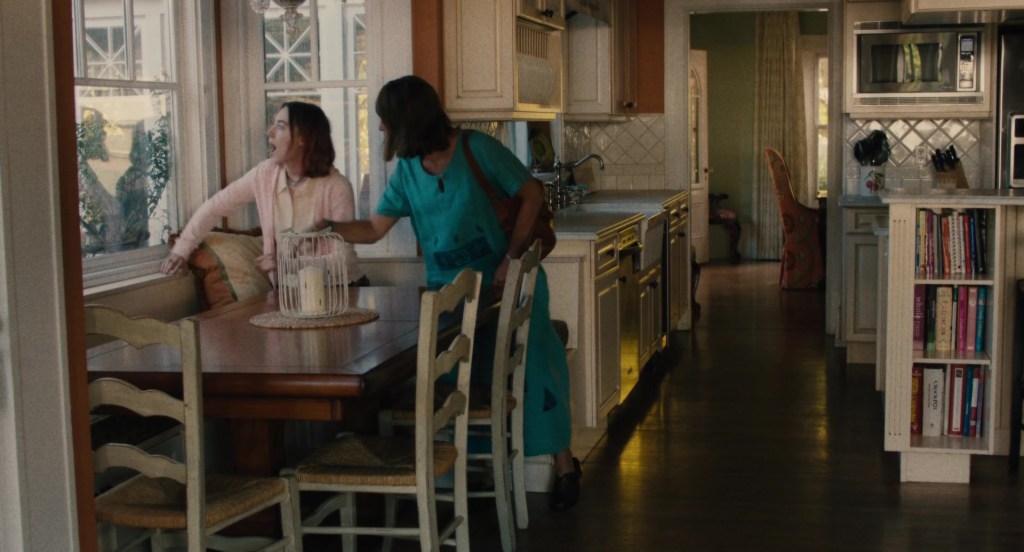
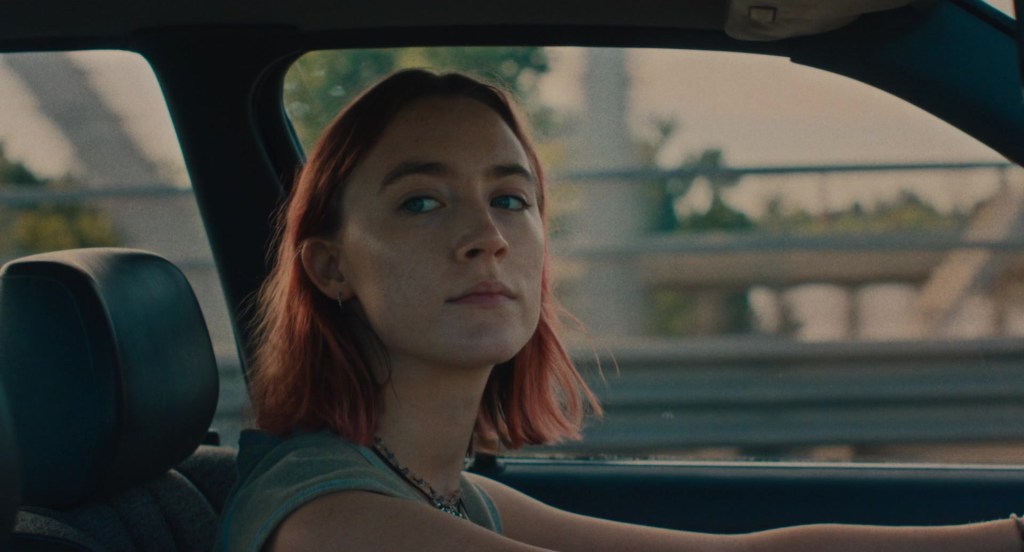
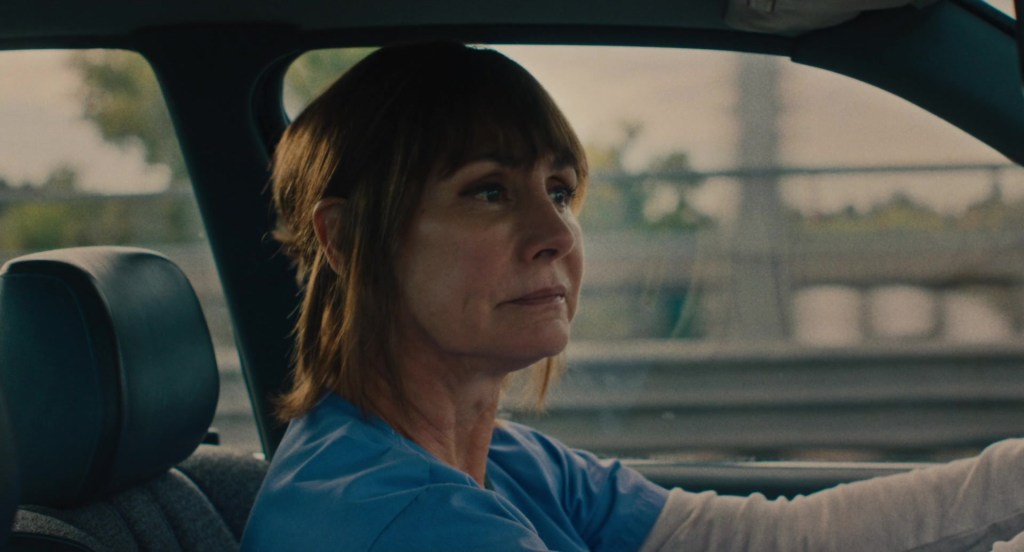
Laurie Metcalf does a spectacular job as Lady Bird’s mother. There’s a scene when they’re shopping together, picking out a dress for Prom, and they’re arguing before flipping a switch and immediately gushing together over a lovely dress they’ve both seen. I also love the scene after Lady Bird breaks up with Kyle. Her mother picks her up and immediately consoles her, then we see them partaking in one of their favourite activities together – dressing up and going to fancy house viewings. I think this highlights one of the most important things about Lady Bird’s mother – she is making a choice to be critical of Lady Bird, to talk down to her and to make her feel small. Marion, for whatever reason, seems to believe that this will help her daughter. However, Lady Bird is at her happiest when she is living for herself, and she reflects on this when she leaves the voicemail for her mum at the end of the film. I think Lady Bird understands the reasons for her mother’s behaviour more than the viewer ever could. That shared experience of driving around your home town, not for any particular purpose but just to take it in, is something that she realises brings them together. They have breathed the same air, driven on the same roads, lived under the same sky. It’s such an incredible relationship to watch play out on screen because so much goes unsaid and unspoken, and we leave them both at the beginning of the next chapter for both of them.


Marion is petty and vindictive however. When she finds out that Lady Bird is on the waitlist for a New York university, she chooses not to talk to her daughter for weeks, possibly months. Lady Bird begs her to talk, says all the terrible things about herself that her mother always told her, but she doesn’t yield. Perhaps this is one of the formative moments for her becoming a better mother. It’s one thing to tell your daughter that she’s not as good as she could be, but to have your daughter say it about herself… Marion’s stubbornness is the only thing that keeps her silent in my opinion, and it’s only when Lady Bird is finally out of reach that she breaks down and realises what she’s done, that the things she said are harmful to her daughter. It is only then that she wants to talk to her daughter, and from the letters that we glimpse at we know that she is starting to try to make amends. However, she still doesn’t give them to her daughter, it’s her husband that does this. It’s a step however, the first of very many you’d have thought, but Lady Bird isn’t the only one who can change. I love that we don’t get to see or hear all the details in these letters too. They are for Lady Bird, not for us.
I also love how many scenes in the film begin with dialogue between characters that aren’t on screen, only to cut into seeing said conversation. I’m sure there’s a name for this, there’s a name for everything, but it feels so warm and comforting. It’s a really wonderful visual story telling technique because Gerwig has made a clear choice about what we see on screen whilst we hear the dialogue. My favourite example of this is during Lady Bird’s, now Christine’s, voicemail to her mother. Voice messages in their very nature are meant to be heard later, they are very much not dialogue, but interspersing and cutting between shots of Christine and Marion driving along the same roads in Sacramento whilst we hear her contemplating her own experiences of the city is a really beautiful way to end the film.

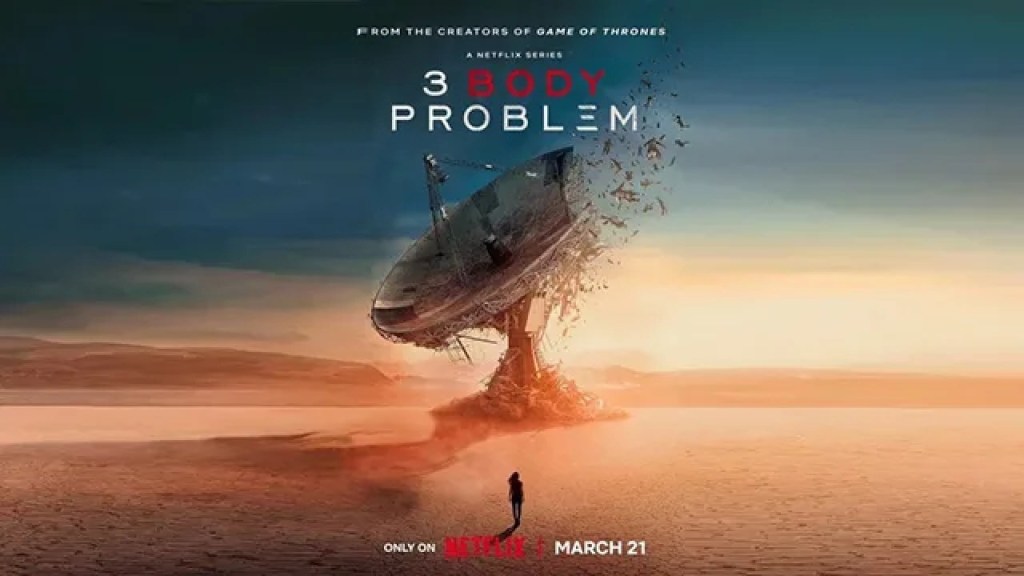
First Impressions – 3 Body Problem

Third time’s the charm, or something like that. Anyway, I’m going to be trying something a little different today. This is the first instalment of a series I’m going to call ‘First Impressions’, where I will talk about the first episode of a given TV series. Only the first episode, mind you. Now the name makes sense. Hardly the wittiest, but being devoid of wit isn’t a crime.

Time to get stuck in. 3 Body Problem was recommended to me by a close friend, in the kind of enthusiastic way that you know it’s really worth a watch, not just the ‘oh yeah, this is kind of good’ way. They’re very different. I’m veering off course very early today, but I digress.

3 Body Problem is a sci-fi series which is based off a Chinese novel published in 2006. I knew next to nothing about this before starting the first episode, and as of writing this I’ve only seen the first two episodes, so no chance for spoilers here! It’s got a very strong cast, including Benedict Wong, Eliza Gonzalez and John Bradley, and was created in part by David Benioff and D. B. Weiss of Game of Thrones fame (infamy?). This may ring alarm bells for those with a short memory, but please remember how good the first few seasons of that show were. This is when they had the source material to work from, which is the same with this show. Also involved is Alexander Woo, who was a writer for True Blood and some other TV series over the last few years.

The opening scene is one of my favourite cliches of any kind of story-telling. A scene that is seemingly unrelated to the rest of the show based on our expectations, but will clearly have strong thematic or narrative significance later on. This seems specific, but the best example I can think of recently is The Last of Us, where the opening scene depicts an old television interview with a scientist who highlights the danger of a fungus that can infect the nervous system. We’re thrown into the middle of a Maoist struggle session, with no context as to what that is or what’s going on. We see academics beaten in front of a braying crowd by members of the military, academics who might question the established order. These struggle sessions formed part of China’s cultural revolution in the late sixties into the seventies, and were credited with helping Mao tighten his stranglehold on the hearts and minds of the Chinese people.

This, essentially, lays the foundation for the series, which revolves around the daughter of one of the murdered academics, as well as a group of academics who are brought together by the death of a friend and mentor. We are also introduced to Benedict Wong’s detective character, investigating unusual circumstances surrounding various deaths across England, and the world. The series splits its time between China following the death of Ye Wenjie’s father, and modern day England, primarily following the characters of Jin Cheng (who discovers an unusual helmet) and Auggie Salazar (whose vision is plagued with a visual countdown to zero). It’s always interesting seeing how a series reveals information to us across different narratives, and I’m intrigued to see how this develops to. You have to be so careful with what you hint at and what you show as not to ruin the surprise. This series so far is most akin to a detective story, where it establishes all of these mysteries that we will obviously delve into as each episode continues.

I really enjoyed this episode because it does such an effective job at hooking you in. This is perhaps the most essential role of an opening episode of a series, along with setting up the core narrative and characters that we will follow throughout. Intrigue is thrown at us in almost a breakneck pace, with each of the first few scenes demanding that we continue watching by giving us something to ponder, to think about, to query. I find it incredibly hard to get hooked in to TV series, to the point where I don’t think I’ve watched a new one this year even, but this has really grabbed me. I can’t wait to see where it goes.