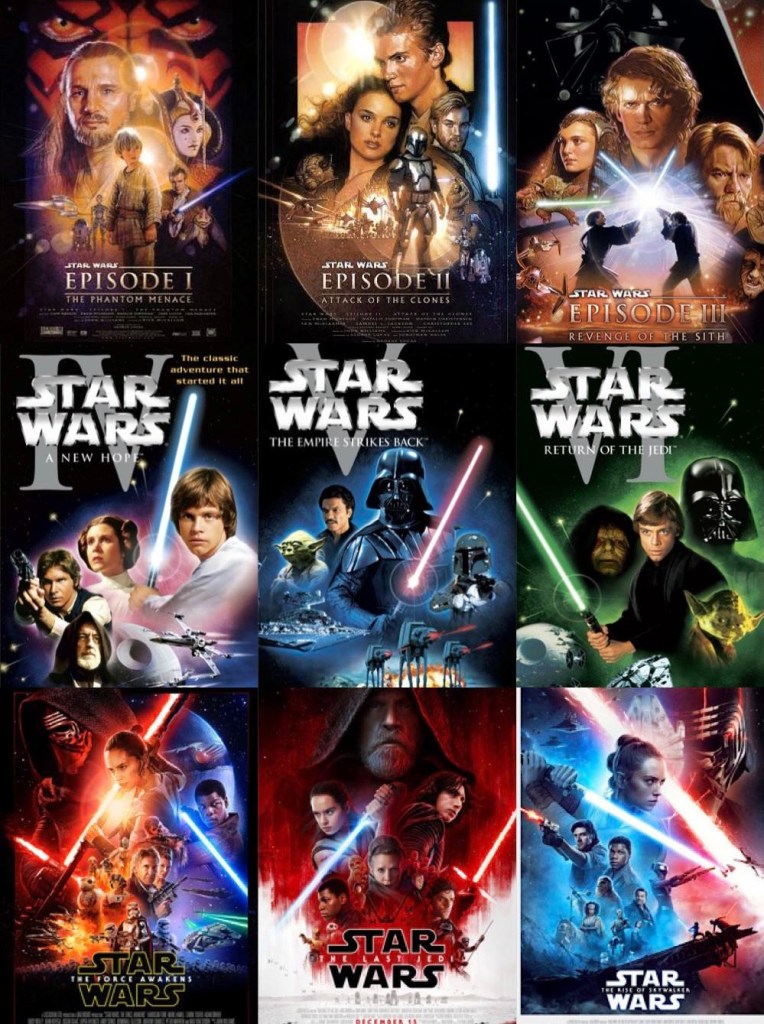
A Definitive Ranking of Every Star Wars Film

To celebrate Star Wars Day, here comes my ranking of every Star Wars film. The ones that matter anyway, all the live action ones. Funnily enough, the film version of The Clone Wars was actually the first film of the franchise that I ever watched. I was hardly off to a great start, was I? But we’re not thinking about that one today. Without further ado, let’s start with the worst of the bunch.

XI: The Rise of Skywalker

I’ve only seen this once, when it first came out at the cinema, and I’d quite like to keep it that way. Goodness gracious, what an absolute shambles. The plot lurches from point to point, from revelation to revelation, none of which are very interesting or surprising. Palpatine returned! Hux is the spy! Rey and Kylo are in love? Finn has something to say! Will he ever say it? No. Because this film was written by committee, by people with no love or creativity. Half of the creative decisions seem designed to bury The Last Jedi into the dirt due to the mixed fan reaction. Rose turns up for a moment just to say that she’d better sit this one out. She might as well have winked at the camera and help up a sign saying ‘I was a bad choice from the previous director, who is an idiot’. What a disgustingly cowardly end to a franchise that has inspired and thrilled so many millions of people. They even retconned the most interesting creative decision the sequel trilogy made, which was to make Rey a nobody who is unrelated to any other character. That’s what the Force is about, right? That all of us can feel it, not that you can only use it if you’re part of like three families in the universe.

X: Attack of the Clones

The battle for last place was a fierce one, but this ultimately just missed out. From the dreadful over-reliance on special effects and green screen that have aged like milk in the Sahara, to the shockingly bad dialogue delivered by people who clearly couldn’t care less, this film is a mess from start to finish. I know the story of Star Wars is hard to escape from the general consciousness, but the ‘plot’ to create a convenient clone army that will go on to destroy their masters seems incredibly obvious in retrospect. Anakin also should have gone to counselling or something, especially after using a Tusken Raider camp as his own personal rage room. I do like the parallel at the end of seeing the vast clone army whilst hearing the imperial march, though. Good choice.

IX: The Phantom Menace

I’ve seen lots of people praise the prequel trilogy by calling it a good story, but poorly told. I’m not sure that I could disagree more. The opening crawl is about a trade route dispute, for crying out loud. This trilogy was doomed from the start. Anakin never should have been shown as an annoying child. The Jedi should never have been portrayed as stupid and bureaucratic as they were. Everything in moderation, and all that. I maintain that starting the trilogy at the outbreak of the so called ‘Clone Wars’, watching Anakin fall deeper into the dark side as the tireless battle wears on and eventually having him manipulated into becoming the Emperor’s puppet would have been far more interesting as a concept. It’s not even too far from the actual story.

VIII: Rogue One

It’s just so bland. It looks gorgeous, the cast are great, the idea behind the story is kind of fun, but it all just falls flat. Some things are better left to the imagination, and while it was thrilling to watch the daring plot on Scarif play out the first time, it really doesn’t seem that great when rewatching. All of the characters are cardboard cutouts who look cool and say cool things, but they really don’t leave any kind of lasting impact. One day, somehow, I’ll understand what the point of Saw Gerrera was. This is another film in the franchise that clearly had a lot of work behind the scenes between filming and the final cut, and yet again it yields a kind of disappointing end result.

VI: Solo

I think this one is simply a matter of personal preference. It’s as unnecessary to the greater story as Rogue One, but I thought the internal events of the film were more fun to watch and I cared about the characters more. I also kind of appreciate the audacity in how they try to explain the origin of things from the original trilogy. Han ‘Solo’ because he’s travelling solo. The blaster that everyone knows and loves (?) was just given to him by someone. What’s a parsec? Who cares. Like all of the Disney era films though, the special (and practical) effects are absolutely fantastic. I thought Alden Ehrenreich was good too, in a rather thankless role.

VI: The Revenge of the Sith

Like the rest of the prequel trilogy, the story is a hot mess that leaps from point to point with no real development to be had. Anakin goes from someone who is a bit doubtful of the intentions of the Jedi order to mass-murdering children with no real trigger point. Watch it again, without the nostalgia goggles on, and tell me if any of his character development feels organic. Without referencing season 5, episode 753 of The Clone Wars TV series, too. It’s very dramatic though, and the dialogue is a definite improvement over the previous two films. The idea for Anakin’s fall was always a good one, but the execution was flawed from day one of this trilogy.

V: The Force Awakens

If the prequel trilogy was ‘good idea, badly executed’ then the best summary for the sequel trilogy (well, this and episode VIII) would be ‘kind of ok idea, brilliantly executed’. The parallels to A New Hope were clearly intentional and designed to remind us fondly of the original trilogy, though it does go way too far at times. I sound like a broken record, but the effects are fantastic too. A lot of love was poured into this film by the whole production team. The trailer was oh so good too, quite possibly the best film trailer ever made. I do feel like this film was one of the first to highlight the ever-dwindling level of media literacy in the general public. For the last time, Rey is not a Mary Sue for being able to defeat Kylo Ren at the end. He had just been shot with Chewbacca’s cross-bow weapon, which was shown about four times in the film to have devastatingly explosive power. We see him bleeding from the wound. We see him devastated at having killed his own father. The only reason the battle ended is because the planet was literally splitting in two, which separated him and Rey.

IV: The Return of the Jedi

The beginning and end make up for the really kind of rubbish middle act. We see a confident and self-assured Luke after his defeat by Vader’s hand at the end of the previous film, and in the end good triumphs over evil. The less said about the Ewoks in the middle, the better though. I read somewhere that they were originally supposed to be Wookies, which would have made far more sense in the film. While Star Wars has always been a franchise for kids first and foremost, this was just a little bit too silly. The last 15 minutes or so is arguably the best part of the entire franchise though, from Luke’s surrender at the second Death Star to Vader’s redemption and ultimate victory for the rebels.

III: A New Hope

Where it all began, and still endlessly watchable to this day. It’s a classic underdog story, but in space! With aliens! And loveable cowboys and scary robot men and princesses and farm boys! It’s incredibly charming and really such a good story. It’s hard to go wrong with the classics, and this is no exception. It’s hard to say much more about arguably the most famous film ever made.

II: The Last Jedi

This is probably my favourite in the franchise, though I will concede it’s not the best (was anyone really expecting anything else to be number one?). Having said that, this film is so much fun for how much it tries to experiment with the established Star Wars formula. Not everything really comes off, but my goodness it gets points for trying. I loved the development of Finn from someone who only really cares about Rey to someone who learns to be the hero he wants to be. ‘That’s how we’re gonna win. Not by fighting what we hate. But saving what we love’. Yes, the line is a little clunky, but isn’t this the central thesis of the franchise as a whole? It’s about the battle of good and evil, but also doing it for the right reasons. Not for personal glory, not for revenge, but to save the people you care about. Finn was never going to destroy the battering ram with that flimsy speeder, it was literally breaking into pieces in the approach, but he was trying his suicide missing for selfish reasons, to be seen as a hero. I’ll save my deeper analysis for the inevitable full-length post on the film, but I still think it’s great.

I: The Empire Strikes Back

Surprise, surprise. This is widely regarded as one of the best films ever made for good reason. It was a bold and daring follow up to something as famous as A New Hope, but it all works. Splitting up Luke from the rest of the gang, in hindsight, was such a risk as well. People loved this rag-tag group of rebels, but splitting them up allows them all to develop and grow throughout the film. Luke starts his journey to become a Jedi, to become a man, and his relationship with Yoda is so much fun to watch. Seeing all these different planets was great fun too, it feels like such an expansion to the universe after spending most of the previous film on either Tattooine or Yavin 4. It’s everything a sequel should be, and the culmination of the film with a battle between Luke and Darth Vader is probably the most thrilling light sabre battle in the entire franchise.

So there you have it, my ranking of the most famous film franchise in history. Let me know your thoughts, I’d love to hear them!
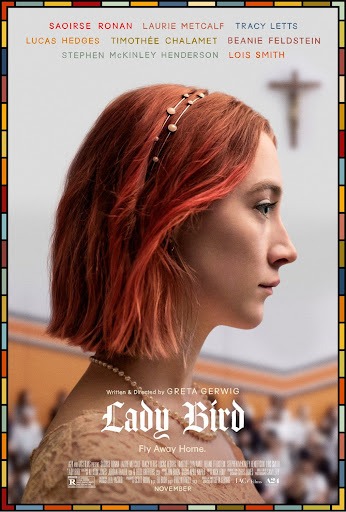
Lady Bird

No pressure, to myself that is, but I think this is probably my favourite film, so I really hope I do it justice. I remember taking my sister to watch this at the cinema all the way back in 2018 and when we came out, we both knew it was a special film. I love coming of age, slice of life type films and Lady Bird fits into that template perfectly. Set during 2002 and 2003 in Sacramento, California (where director Greta Gerwig was born, more on that later), the film follows the titular Lady Bird (Christine) as she navigates her final year of high school.
Anyone who has even been near an English degree will have heard of Roland Barthes’s essay ‘The Death of the Author’. He argues that the biography and external context surrounding the author’s life and intention for writing something is ultimately irrelevant, it’s all about the reader’s interpretation and understanding. Barthes is wrong. I’ve simplified his argument so it’s easier to make my point (why doesn’t everyone do this?), but criticism is something multi-faceted and every-changing, so to reduce it down to ‘author irrelevant’ is ridiculously reductionist. No, we shouldn’t take the author’s word and intention as gospel, but when Gerwig was born and raised in Sacramento just a few years before the film was set, how can we ignore that? Lady Bird’s essay for her university applications is about Sacramento, and is even referred to as a love letter to the city. Lady Bird doesn’t intend it to be, but is told that it reads like love. While I don’t feel that the film is an autobiographical bildungsroman per se, it is clear to me that the film is a love letter to Sacramento, to the years of adolescence where we struggle more than ever to understand how we fit into the world. How better to illustrate that than a young woman who desperately wants to leave the place that she grew up, while also being deeply intwined with the people and roots of that place?
So much of the film is about Lady Bird’s identity, of her discovering how she fits into the world. Her name is chosen by herself, at least partly in defiance to a mother who criticises her at every turn. She experiments with different aspects of her personality throughout the film, from trying out the theatre to trying out being ‘cool’. The real Lady Bird, the real Christine, lies somewhere within this spectrum, something which she begins to discover at the end of the film. She realises that she wants to be with Julie instead of her new cool friends for Prom. She realises that moving to the other side of the continent brings a loneliness that she’s never had to confront before. She realises that despite everything, she appreciates what her mother, Marion, has done for her, even throughout their strained relationship on screen.


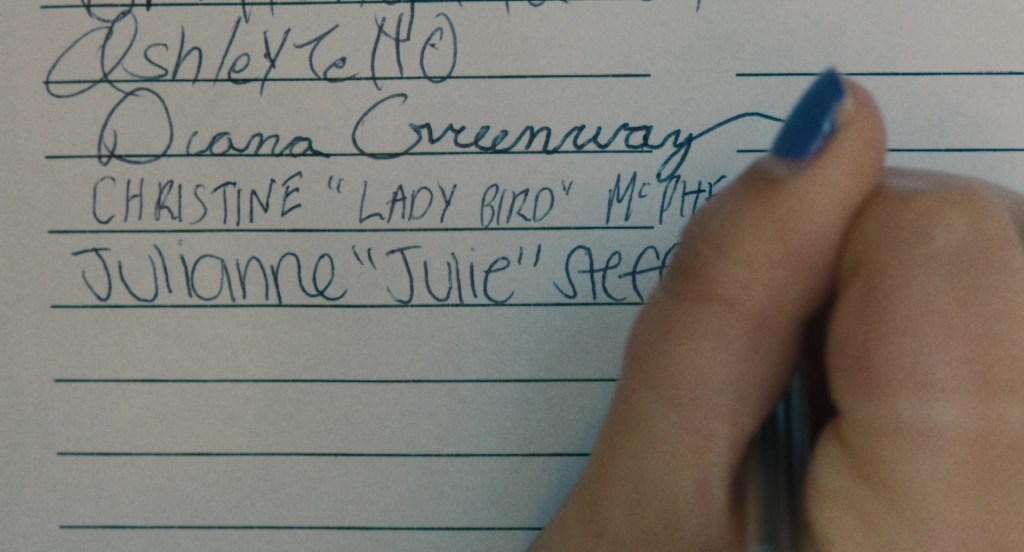
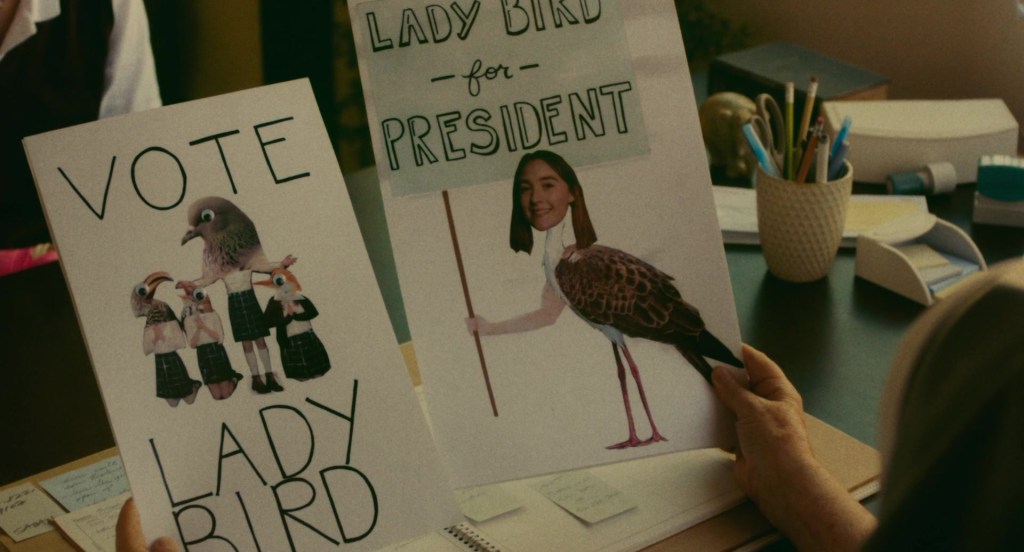
Unlike other commentators, I wouldn’t describe Lady Bird as selfish or self-absorbed, but she certainly behaves like it at time. At the beginning of the film, she signs her name as “Christine ‘Lady Bird’ McPherson for the school play, and then criticises her friend for putting “Julie” in quote marks as it it’s a shortened version of Julianne. It’s not the same, Lady Bird says, but why can’t it be? Lady Bird is not the only person who chooses to go by a different name from their birth certificate, but she wants to be. Throughout the film, she fluctuates between wanting to stand out and wanting to fit in. She wants to be seen and heard, to be admired in some ways, but she also wants to settle down with the cool kids and act like she doesn’t have a phone out of choice, not because her family can’t afford one. Yes, Kyle, I’m looking at you. You may have fooled everyone else when you called Lady Bird ‘good girl’ for not owning a government tracking device (mobile phone), but you haven’t fooled me. Timothée is as good as ever though; it took me several films he was in to see past the smug and edgy façade that he plays so well.
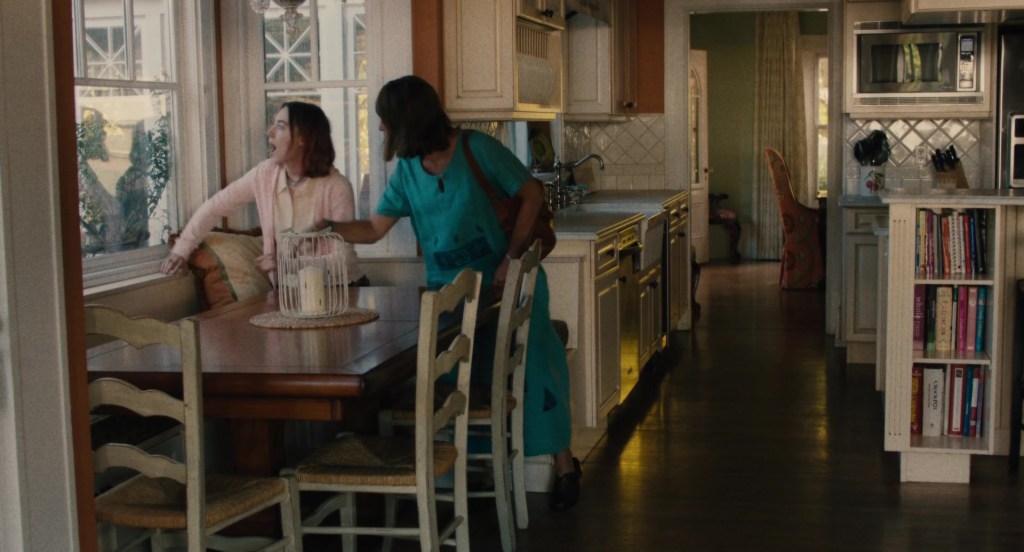
She talks about how she’s from ‘the wrong side of the tracks’ and she asks her dad to drop her off away from the school. She doesn’t do this maliciously, but she doesn’t think of how this will look and sound to the people she cares about. She takes her parents and her family for granted slightly, she knows that they have to be there and so does she, but she rarely thinks about how she can harm those closest to her. She’s not wrong at all in not being happy about the way her mother treats her, but we, the audience, can see deeper into why her mother treats her this way. I think Marion genuinely believes that criticising and pressuring her daughter at almost every turn will help build her character, will turn her into a stronger person. There is certainly some disappointment about how her own life has turned out and I imagine she thinks that by coming down hard on Lady Bird, she might turn out differently from herself. We also learn that her own mother was an abusive alcoholic – this is all we hear about that relationship, but it also sets us up to think about why she can be so harsh towards her daughter. I don’t feel like I’m being asked to condemn or condone what she does, simply to think about it. There’s a moment later in the film when her new friend realises that she’s lied about her house – Lady Bird wants to appear rich and sophisticated so lies about where she lives. Jenna doesn’t seem to even care about that, just about the fact that she’s lied. Don’t get me wrong, Jenna is never portrayed as a good friend to Lady Bird, but this just helps highlight that Lady Bird acting like someone that she’s not is not good for her.


I think it’s also important that three of the major supporting characters suffer somewhat with depression, to which Lady Bird is oblivious. One of my favourite scenes in the film is when they’re doing a drama warm up, playing to see who can be the first to make themselves cry, and within seconds Father Leviatch has broken down to tears. At first, it’s played for laughs, but this is one of the last times that we see him on screen. The next time we see him he’s talking to Lady Bird’s mother, who we know is a mental health nurse. This also puts into strong contrast the relationship that Marion has with her daughter compared to other people. So often throughout the film, we see her laughing and chatting amiably to other minor or unnamed characters, checking in on them and their lives. This ties in to the nature of her work, to care, but we also see her find this so hard to do with Lady Bird. Similarly, when Lady Bird goes to Julie’s for Prom she finds her friend crying, saying that nothing is really wrong, but some people aren’t built happy. Most importantly, Lady Bird’s father also suffers from depression. She doesn’t even realise that he’s struggling, she knows that he’s lost his job but he doesn’t want to concern her with his mental health struggle. Her mother uses it as a weapon to almost insult Lady Bird, to ask why she’s so self-centered that she didn’t even realise what her father is going through. This isn’t her fault though, because we also see her father try his best to support Lady Bird and to not let her see what he’s suffering through.
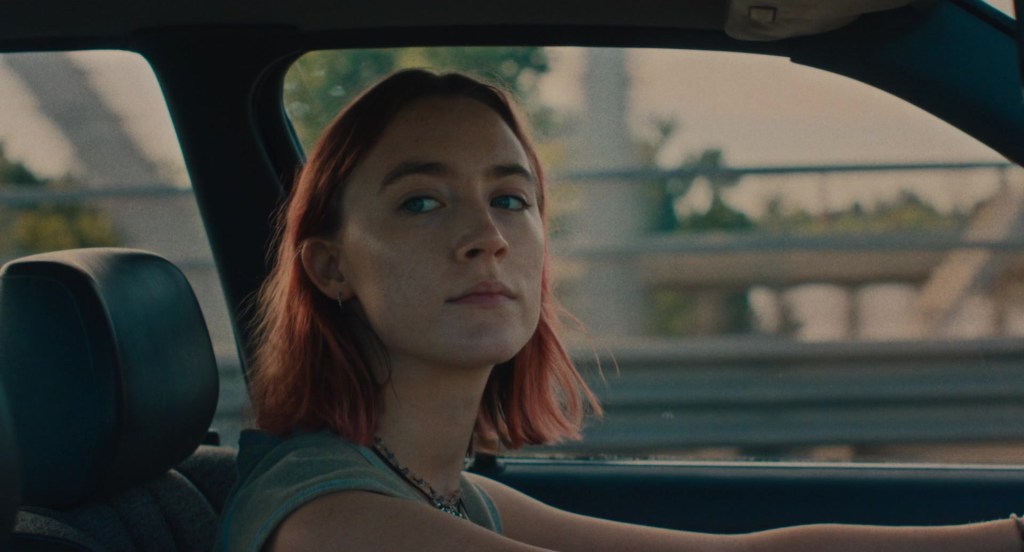
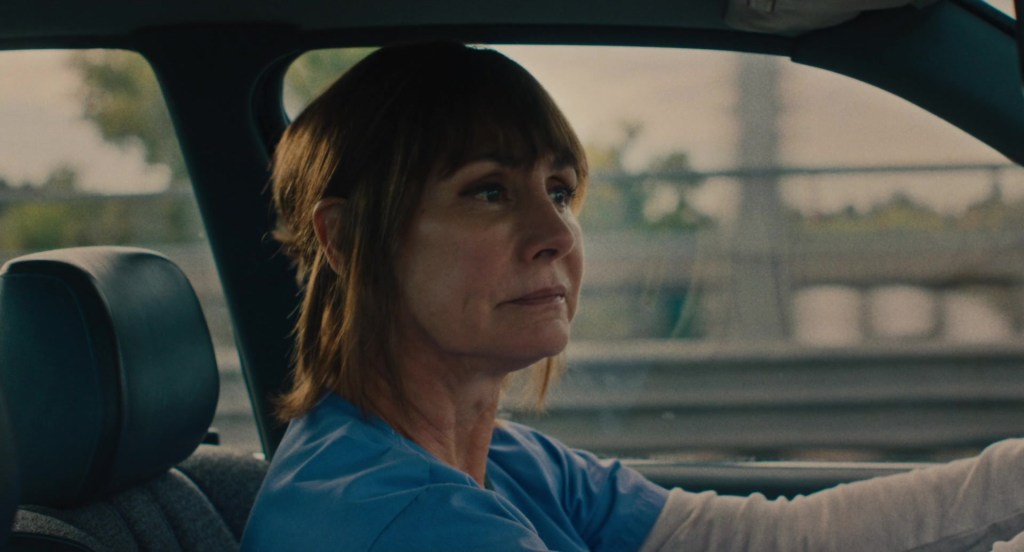
Laurie Metcalf does a spectacular job as Lady Bird’s mother. There’s a scene when they’re shopping together, picking out a dress for Prom, and they’re arguing before flipping a switch and immediately gushing together over a lovely dress they’ve both seen. I also love the scene after Lady Bird breaks up with Kyle. Her mother picks her up and immediately consoles her, then we see them partaking in one of their favourite activities together – dressing up and going to fancy house viewings. I think this highlights one of the most important things about Lady Bird’s mother – she is making a choice to be critical of Lady Bird, to talk down to her and to make her feel small. Marion, for whatever reason, seems to believe that this will help her daughter. However, Lady Bird is at her happiest when she is living for herself, and she reflects on this when she leaves the voicemail for her mum at the end of the film. I think Lady Bird understands the reasons for her mother’s behaviour more than the viewer ever could. That shared experience of driving around your home town, not for any particular purpose but just to take it in, is something that she realises brings them together. They have breathed the same air, driven on the same roads, lived under the same sky. It’s such an incredible relationship to watch play out on screen because so much goes unsaid and unspoken, and we leave them both at the beginning of the next chapter for both of them.


Marion is petty and vindictive however. When she finds out that Lady Bird is on the waitlist for a New York university, she chooses not to talk to her daughter for weeks, possibly months. Lady Bird begs her to talk, says all the terrible things about herself that her mother always told her, but she doesn’t yield. Perhaps this is one of the formative moments for her becoming a better mother. It’s one thing to tell your daughter that she’s not as good as she could be, but to have your daughter say it about herself… Marion’s stubbornness is the only thing that keeps her silent in my opinion, and it’s only when Lady Bird is finally out of reach that she breaks down and realises what she’s done, that the things she said are harmful to her daughter. It is only then that she wants to talk to her daughter, and from the letters that we glimpse at we know that she is starting to try to make amends. However, she still doesn’t give them to her daughter, it’s her husband that does this. It’s a step however, the first of very many you’d have thought, but Lady Bird isn’t the only one who can change. I love that we don’t get to see or hear all the details in these letters too. They are for Lady Bird, not for us.
I also love how many scenes in the film begin with dialogue between characters that aren’t on screen, only to cut into seeing said conversation. I’m sure there’s a name for this, there’s a name for everything, but it feels so warm and comforting. It’s a really wonderful visual story telling technique because Gerwig has made a clear choice about what we see on screen whilst we hear the dialogue. My favourite example of this is during Lady Bird’s, now Christine’s, voicemail to her mother. Voice messages in their very nature are meant to be heard later, they are very much not dialogue, but interspersing and cutting between shots of Christine and Marion driving along the same roads in Sacramento whilst we hear her contemplating her own experiences of the city is a really beautiful way to end the film.