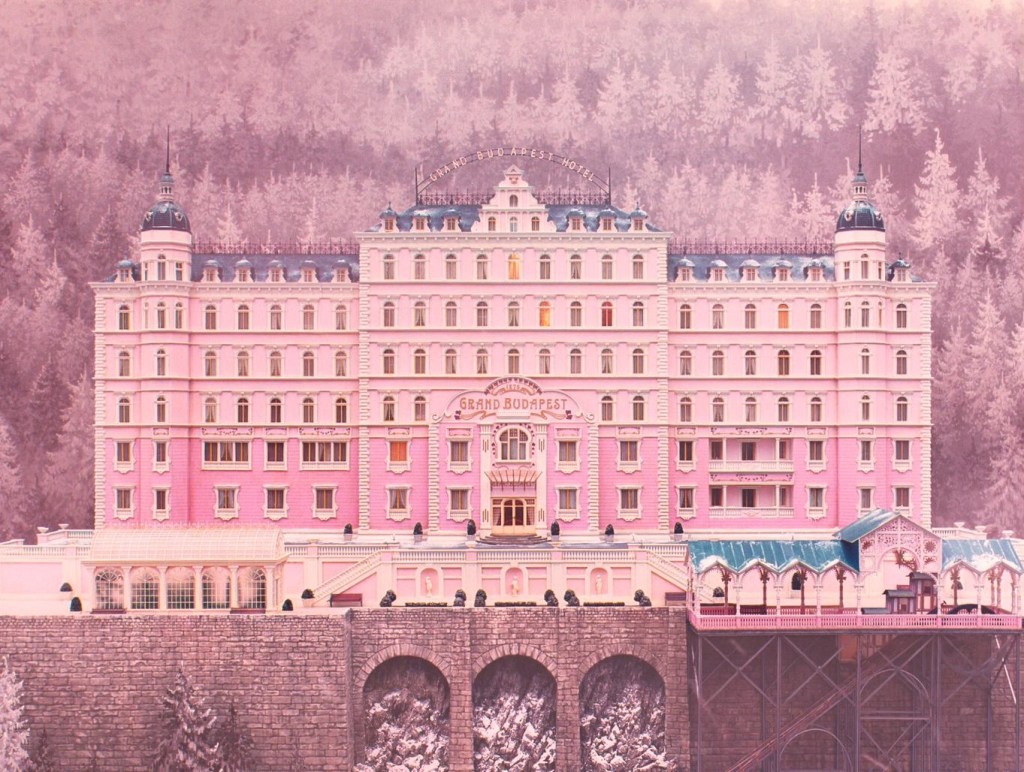
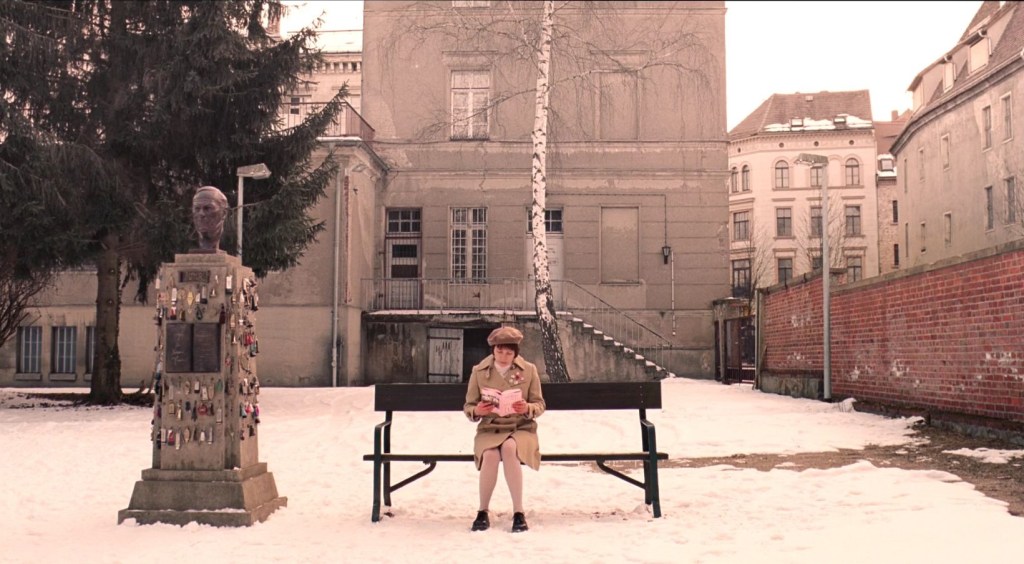
I think that The Grand Budapest Hotel was the first Wes Anderson film that I watched, and what an introduction to his work it is. He’s got such a distinct and unique style and it feels the most distinct in this film, you could pick out almost any frame and instantly know that he directed it. It’s not just the visual and aesthetic style that is so distinct however, it’s also how he moves the plot forward and the characters that he introduces. Each of his films (excluding the couple that I haven’t seen) have a distinct undercurrent of melancholy, a feeling of loneliness and sadness that is hidden just beneath the surface, beneath the meticulously crafted symmetrical shots. Anyone who knows me will know that I love this sort of sad stuff, I struggle to make any music playlist for example that is anywhere more upbeat than ‘sad’. It’s almost like Anderson puts up a barrier between certain characters, keeping them separate from each other. M. Gustave and Zero, the two heroes of the story, are frequently separated throughout the film and even when they’re in the same physical space they are often separated by the camera. It’s not all sadness though, as another thing that we tend to see in Anderson’s film is a feeling of hope and optimism to balance this out. It’s always darkest before the dawn, as they say, and this film is a real reflection of that. Just as a final note to this paragraph, I’m not sure I’ll be using screencaps to illustrate my point so much as decorate my blog, it’s just such a pretty film to look at.
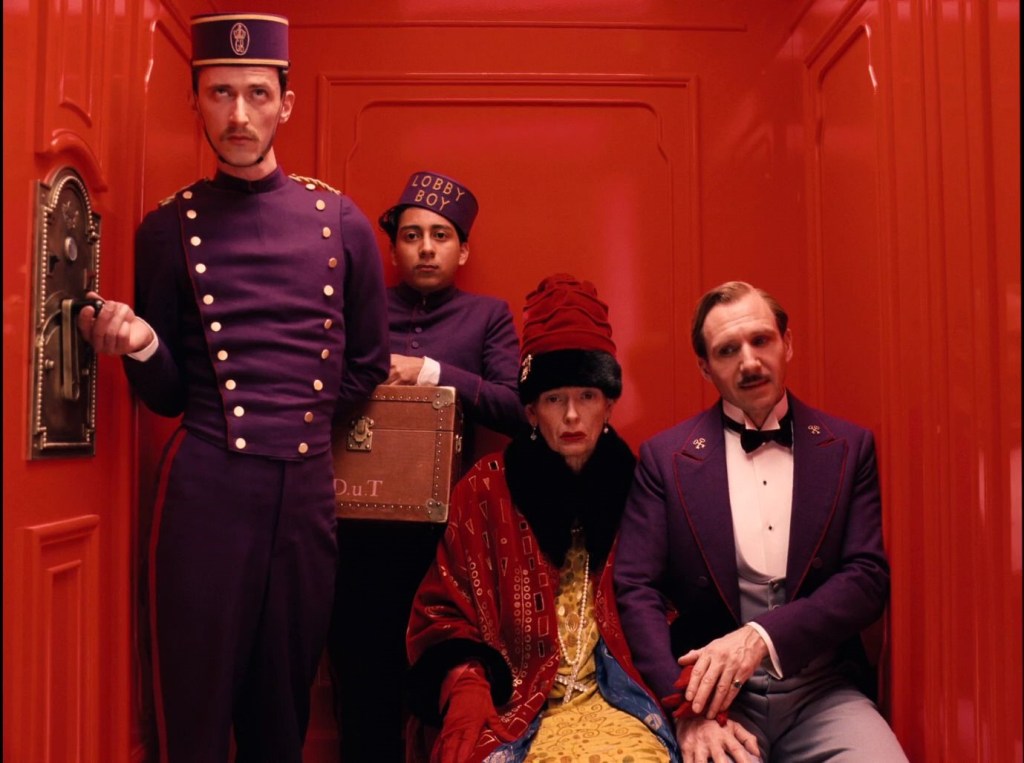
For me, a film lives and dies on the characters that it gives us. That’s not to say that plot is irrelevant to me, far from it, but I would much rather experience a character driven story than a plot driven one. The Grand Budapest Hotel, in spite of all of its lavish set pieces and wacky adventure to sell a priceless piece of artwork and escape law enforcement, the driving force of this film is in its characters. M. Gustave is one of the most remarkable and wonderful characters that I’ve watched come to life on screen, for such a short film he feels so lived in, and this is largely in part to the portrayal by Ralph Fiennes. He brings so much warmth to someone who is an oddity, a man out of time, a man whose position is no more grandiose than a hotel manager, a man who is really rather selfish at times. However, he is ever so charming, and you see his kindness emanate throughout the film. He may be impatient and a little brash to his inferiors, but he is always kind to those who deserve it. Zero is very much a foil to Gustave. He is selfless and patient, out of place rather than out of time, which I think is why both of these characters bond so quickly.
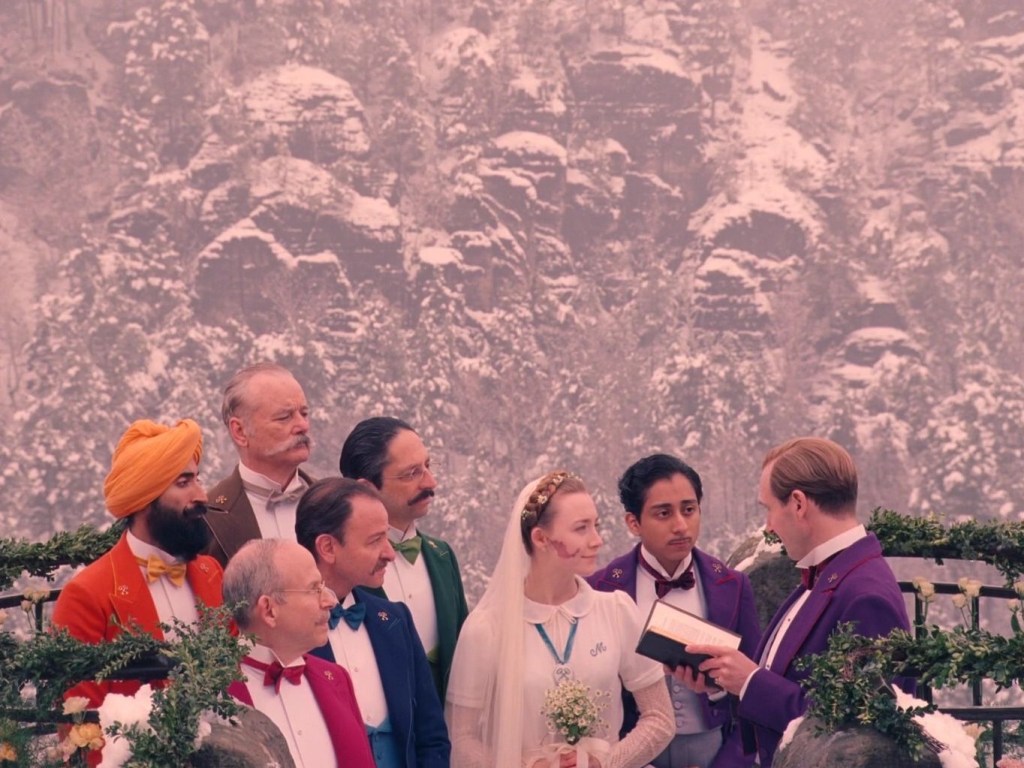
The relationship between Gustave and Zero is just wonderful, from the first moment they first interact on screen until the last, you watch this lovely relationship play out. Two men from very different parts of the world, of different backgrounds, bonding as equals, as brothers. As Zero says to the Author, they shared a vocation, but their bond was so much deeper than that. While Zero looked up to and admired Gustave – a well put together gentleman at the top of his field, someone to aspire to, I believe that Gustave considered Zero to be more than his protégé, almost like a family member. Gustave’s taste in older women is a reflection of his own insecurity, Zero even says that they need to be vain and needy. Zero is Gustave’s hope for the future, acting almost as a father figure in his mentoring though they are more peers than anything else. They mentor each other throughout the film and you see both of them grow – one in confidence and one in humility as the events of the film play their course. It is suitable that Zero inherits the fortune left initially by Madame D. as he becomes the final remnant of Gustave’s legacy. Even though Zero tells the author that he keeps the hotel for Agatha as they were happy there, Gustave is part of the reason they could be happy there. He married them, after all, and a little part of him will always remain in the hotel.
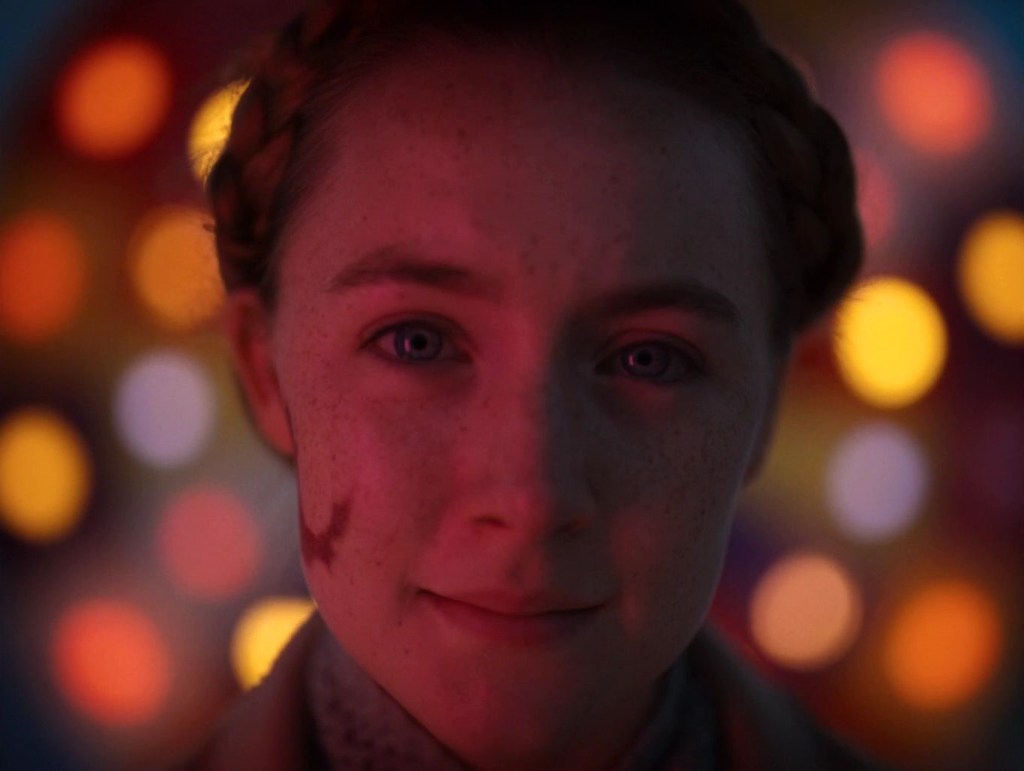
I love the way that this film plays with time too. You’ve got the introduction, set in the present, then you go back to The Author as an older gentleman, before he takes you back to his trip to the Grand Budapest Hotel as a young man, where an older Zero takes us back to the action of the film, in 1932. The use of time shifts as a framing narrative is often overused, but here it feels appropriate and not excessive. The most notable time that we are taken away from the action of 1932 is when Zero’s narration shifts to Agatha, and we’re taken back to see how their relationship was established. This is a lovely little segue, even though from Zero’s tears we know that a happy ending will not be coming, because we can see their youthful love for each other burst free from the screen. I know you weren’t expecting an Interstellar reference here of all places, but love truly does transcend time, as Doctor Brand theorises. Zero and Agatha’s love for each other extends well beyond her untimely passing, as does the hotel in how it exists beyond its own time period. Lots is said in the film about how the hotel (and Gustave) are too old fashioned to exist in their present day, but that doesn’t mean that they can’t live on through the characters that endure on.
This is also seen with the war that afflicts Zubrowka. There are hints of it throughout the first part of the film, including newspaper headlines, and we can sense from here that this war will have an effect on proceedings, though we’re not sure how or when. We don’t really see the effects of it until the first train journey of M. Gustave and Zero. Even here, where the situation appears dire, all is made well rather quickly, off the back of a favour to an old friend. This is one of the remnants of Gustave’s world, the one that Zero feels he was too late for, a world of kindness and favours to be repaid. This is a sharp contrast to the second train journey of the film, where the protagonists are again stopped, but this time there is no smiling Henckels to greet them, instead a much harsher, grubbier, battle-hardened soldier. He does not respond to Gustave’s charm, instead shooting him almost on sight. In a way, this was the only end that would have suited him. We all enjoy a happy ending, but Gustave was never due one, not from the moment that we hear Zero’s summation of him to the Author over dinner. Instead, he died as a beacon of the world that he yearned to be a part of, a time that he kept alive in himself by saving the life of his dear friend. The war is not an issue throughout the film until the final act. It is looming, yes, and it is a clear reference to the real-life wars that affected Europe throughout the twentieth century, but we only see how this war affects everything until the very end. The war kills Gustave, as well as what must be countless unnamed and off-screen individuals, and the effects of it cause Zero to lose the vast fortune that he and Gustave worked throughout the film to earn. However, and most crucially, it did not succeed in taking away Zero’s spirit. We can see the effects that this story has as it ripples through time, courtesy of Zero recounting it to the Author and the Author then to his readers. Their story, and the hotel, will never die.
I fear I haven’t done this film justice, though I’m not sure it’s possible to in a few mere paragraphs. It really is a charming and delightful piece of work, one that I can watch over and over again and never get bored of. Despite the serious backdrop of the events of the film, it really is very funny and remains that way even now, when I know so many of the lines, which is always a good sign in my book. The whimsy of the plot overshadows this foreboding backdrop which I think is a key theme of the film, that happiness is found in the smaller parts of life. Even when everything else is going wrong, it can’t be all bad as long as you hold on to those fleeting moments of humanity and kindness.

 The Herbshank Blogdemption