Harry Potter and the Philosopher’s Stone is like a warm hug from an older relative. It’s calming and familiar and it’s always there for you when you need it. Adapting a book as popular and famous as Harry Potter and the Philosopher’s Stone was always going to be an interesting endeavour. It’s a book that demands not only a huge amount of money, but also a lot of time to do right due to the fact that in the very likely probability that it would be a success, there were many more books to adapt within the next few years as each book covered a single school year. The various directors and creative voices that influenced the Harry Potter film series created four very different periods in the series, and while I only think that one was a truly successful film on a creative level, it’s interesting to look at every single one individually. This is the first of at least eight posts, maybe more depending on how much I’ve got to write, about the films in order, though other posts will likely come in-between them as that’s a lot of Harry Potter content all in a row.
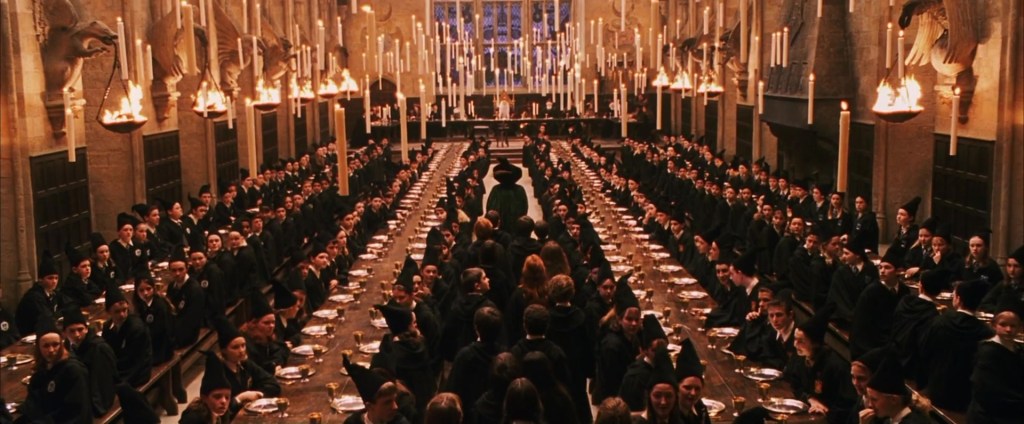
It’s easy to love the first film in the Harry Potter series. It’s sincere, sweet and earnest, hitting all the right notes for a family film with what I imagine were state of the art visuals at the time, not only utilising CGI but also really intricate and elaborate set and costume work. I’ve been on the studio tour a couple of times, and each time I do it becomes more and more clear how much of a labour of love this first film was in particular, with most of the major sets and designs surviving three more directors, each with their own creative vision. A lot of the interior of Hogwarts is beautifully constructed, especially the great hall with its fireplaces and iconic floating candles. However, we’ll start with the negatives before I move on to the positives, as I always find it’s nice to end on a high note.
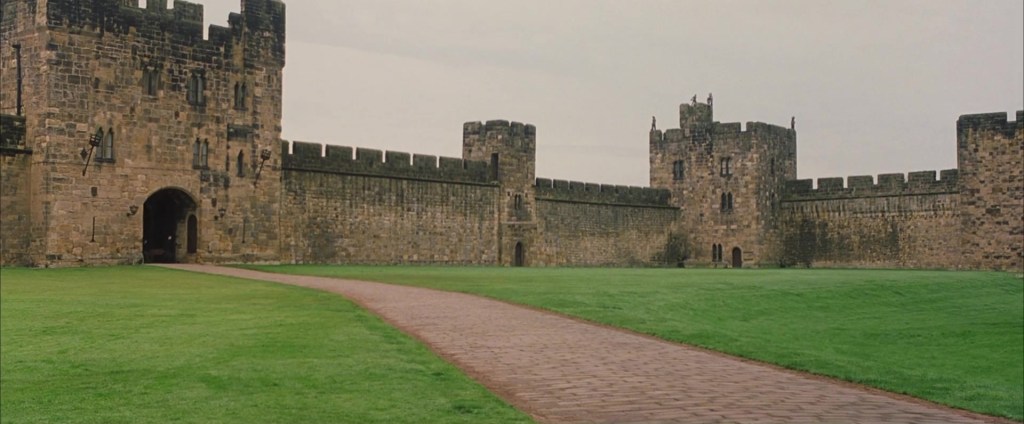
It’s quite a poorly put together film in a lot of ways though, I’m not exactly a film making expert but even I noticed some unusual editing choices. For example, there’s an odd scene about halfway into the film where Harry finds out he’s going to be the new Gryffindor seeker, which then immediately cuts to another scene where the ghosts are talking about how Harry is going to be the new Gryffindor seeker. It’s just unnecessary, we don’t need reminding of this fact, especially as the scene then moves to the gang talking once again about how Harry is the new seeker. It’s repetitive and boring, and I’m not entirely sure how something like this was left in, the ghosts make sporadic appearances throughout the film but surely they’d have been better in the background here than just reiterating known facts? They also use almost identical establishing shots for both Quidditch practice and Harry’s training with Oliver Wood. They occur in the same place, we don’t need to see the same courtyard twice, especially when it looks like this. Not very impressive at all, unlike the exterior shots of the main castle.
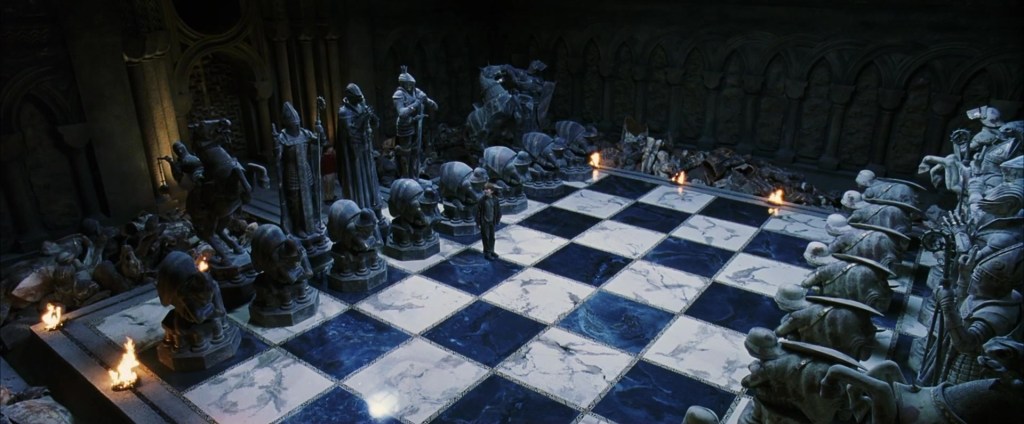
Speaking of Quidditch, there’s also the weird bit that demonstrates that Harry is a Really Great Seeker! When Wood releases the snitch from the chest, Harry keeps up with it moving whereas Wood just looks in completely the wrong direction. It looks like he’s actively looking away from where Harry is looking, which is no way to look for something. He’s supposed to be a goal keeper, knowing where the ball is one of his primary jobs. These moments aren’t necessarily bad but it just feels like amateurish directing. There are some bits from the book that are left in with no context or explanation, which lead to continuity errors within the film. One notable example is during the giant game of wizard’s chess, where three spaces are just inexplicably left open, as unlike books, films don’t have a paragraph to explain things like this. In fairness, this isn’t a huge issue with this film, but it does become a big issue later on which I’m sure I’ll go intro greater detail about when it comes up. I have to include a shot of the chess board though, because what a fantastic piece of set design!
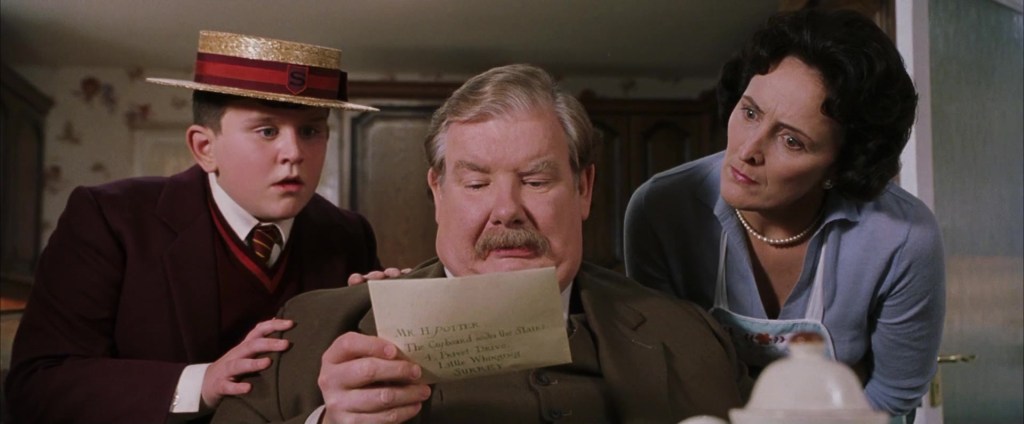
Having said that, I like a lot of the details that are kept in from the book, ones that aren’t necessary in any way to the plot but act like easter eggs for the book readers. These include things like Dudley Dursley’s school uniform for Smeltings school, and Harry wearing shirts that are rolled up at the sleeve as he only wore Dudley’s old shirts.
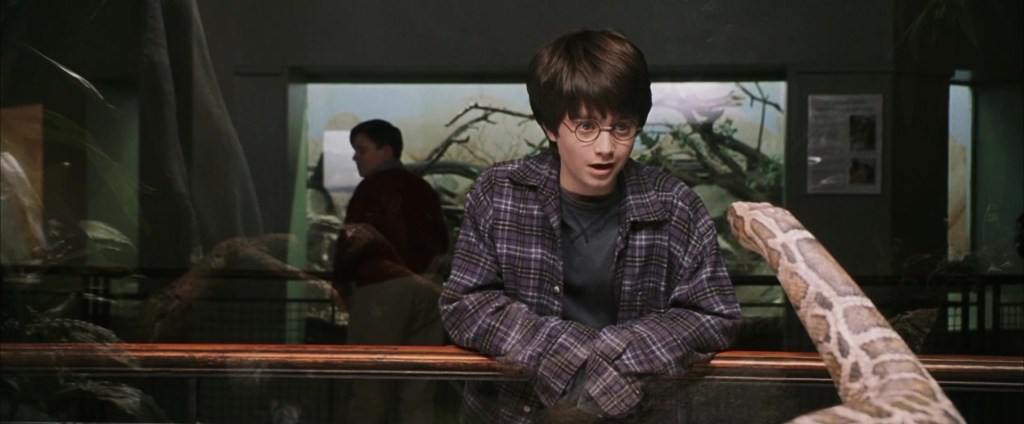
The attention to detail in this film is its main redeeming feature in my eyes, it certainly has a lot of qualities despite my criticism of it so far, but this is one thing that stands out the most. The thought and care that’s gone into the sets and costumes is incredible, even if I disagree with some of the artistic choices when it comes to the castle itself and the way its presented. I do find issues with the tone as well though, the whimsy from the books is missing and often replaced with a self-seriousness that feels a little out of place in a magic school. With that being said, things like the Forbidden Forest and Argus Filch are taken seriously and are seen as scary by the characters, which is something some of the later films don’t quite get across.
The film also feels so outdated, even taking into account that it came out nearly twenty years ago. It just seems so old and dusty that it feels like an early 90s television serial, and that’s not because it’s set in an old and dusty castle. The colour palette for most of the shots inside the school are a dull, orangey brown that just feels so bland. The way the film is shot is also uninspired. As I was scrolling through a website in order to find screencaps to put into this discussion, it struck me just how much of this film comprises of basic shots of a character’s head and shoulders as they talk or react to something. There’s often nothing very exciting on screen, even with all the magic and wonders that we see it’s just sort of okay. I don’t recall being dazzled by the magic in this nearly as much in other films in the franchise. There’s supposed to be magic and colour and eccentricity everywhere, but other than the glimpses of chocolate frogs and levitation, this feels a little unrealised after the brilliant early scenes at Diagon Alley. Just take a look at these two shots below, one is of The Leaky Cauldron in this film, and the other one is from The Prisoner of Azkaban. While the set is slightly different, the design is still similar and it just shows how murky a lot of this film is, which is a shame really.
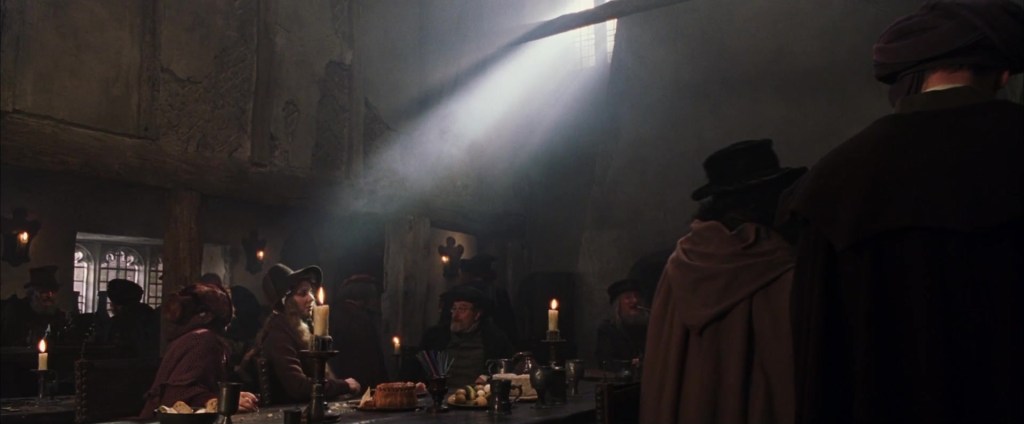
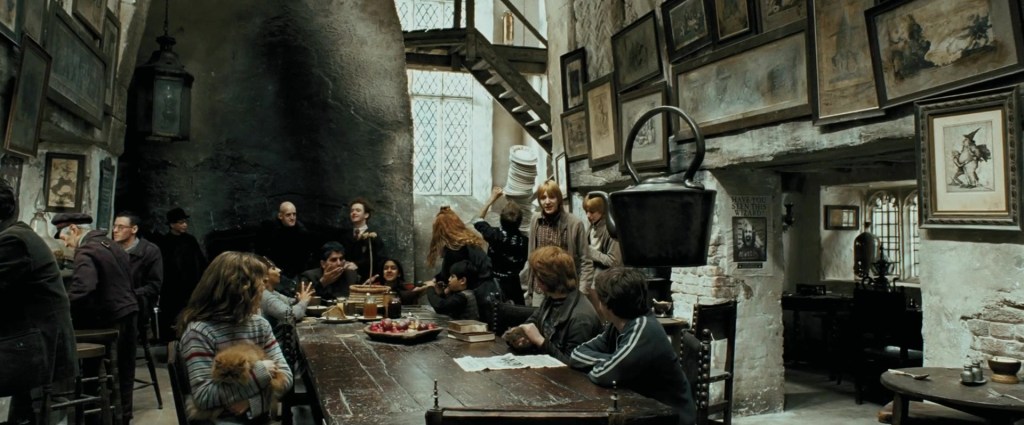
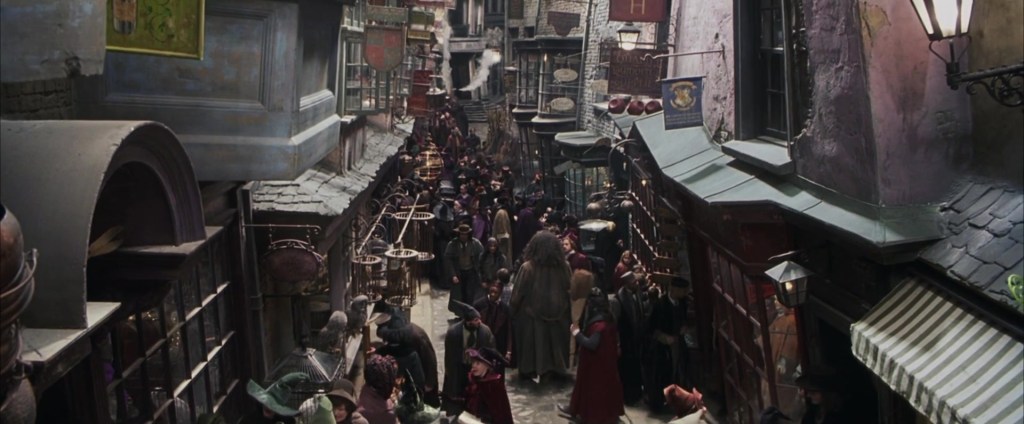
There are some definite outstanding moments though and I think that is what this film is all about. It sets up the world of Harry Potter and despite all of my issues with the presentation, there are hundreds more things that I like about this film. The set design, at least for the locations that remain throughout the series, is second to none and we can see little additions to these made throughout the series. Like I said a little while ago, Diagon Alley is brilliant, as is the design for both the interior and exterior of the Hogwarts Express. They both have that perfect mix of old fashioned with a drizzle of magic, and it’s no wonder that both locations are revisited throughout the series.
Something that is always brought up when talking about the merits of the films is how spot on the casting is, and I can’t help but emphatically agree. Whether you’ve read the books or not, every single character is absolutely spot on. While Professor Snape (and therefore Harry’s parents) are aged up by about ten to twenty years from their book counterparts, Alan Rickman is superb at the menacing evil teacher that Harry perceives him to be. Hagrid and Professor McGonagall are equally fantastically cast, the list goes on really so I won’t bore you too much. I really like Richard Harris as Professor Dumbledore as well, he brings a delicateness to the role that isn’t really present in the first book, where he’s portrayed more as an eccentric old wizard. The conversation between him and Harry in the hospital at the end of the film works exceedingly well because of it, as well as the conversation in front of the Mirror of Erised.
I know a lot has also been said about the quality of the child actors too, but I really do think that’s an issue with the direction more than anything. Their competency is shown in The Prisoner of Azkaban (and yes, this will be a constant comparison throughout my chronicling of the series) when they’re under the instruction of a brilliant director. While they’re obviously inexperienced, I think Daniel Radcliffe expresses the sincerity required for Harry, Emma Watson the snootiness of Hermione and Rupert Grint the loyalty and bluntness of Ron. At the end of the day, they all had a good time and that’s all that matters surely? As is so often the case with actors that grow up with the role, the film versions take on characteristics from the actors that portray them, which does come across here even this early on. The other child actors aren’t really in it enough to make an impact, but they’re okay too really. A nice glowing review from me there.
I almost forgot to say, but the music! What a magnificent, soaring score from John Williams. He doesn’t miss often but this is one of his finest achievements in my opinion. So many pieces of music are so iconic and recognisable that it’s impossible to pick a favourite. Every single piece fits into the film seamlessly, elevating what we see on screen to new heights. I think that might be an issue with looking at stills for this film too in order to decorate this review, each scene is improved by the score so that even when the corridors and turrets of Hogwarts are a bit too murky brown, the score makes it feel like you’re in a supernova, such is the quality of it.
Despite all these little nit-picks and flaws, it’s one of the few films that I will watch whenever it’s on TV. It’s such a fun film, where the casting is all so spot on, that anyone can sit down and enjoy it. It probably sounds like I absolutely hate the film based on what I’ve written here, but that couldn’t be further from the truth. I don’t care about the musty décor of the castle, the weird directorial choices or the middling acting throughout. What I care about is seeing this wondrous location and these brilliant characters brought to life, and brought to life in a way that is just so pleasant. The colour grading doesn’t matter when you’ve got flying candles and staircases with a mind of their own. The questionable child acting doesn’t matter when you’re watching a genuinely entertaining plot unfold in front of you. In short, I don’t care that lots of parts of this film aren’t very good with retrospect, because all together they made something wonderful. The Harry Potter series is such a source of comfort and warmth that you really do just sit down and go along for the ride. There’s so much more that I could say but I’ll limit myself to a mere two thousand words today.
Also, just a little side note/ post script, how many people are actually in Gryffindor house? The books would have us believe that there are five boys and five girls, but I think I counted twenty students following Percy Weasley up to the common room. Look!
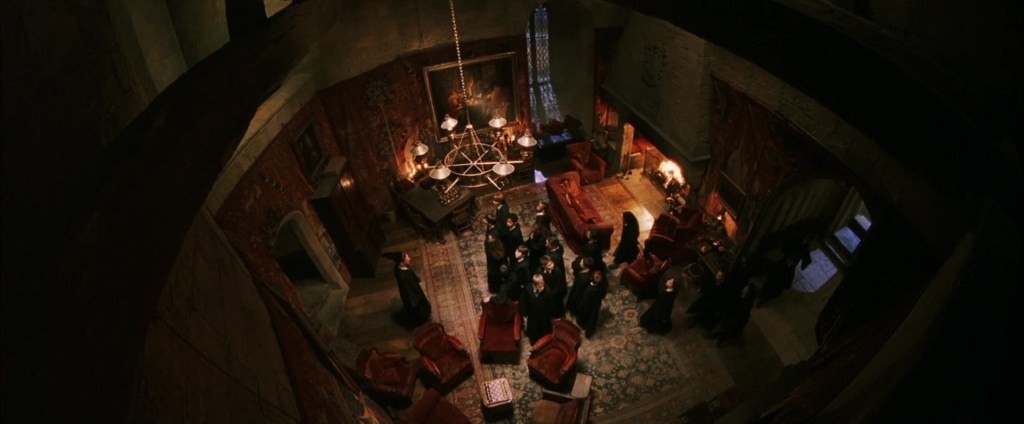
There’s also the extra Gryffindor boy who shows up in Prisoner of Azkaban to talk about omens of death and how Sirius Black is impossible to catch, and then Katie Bell is shifted down a year to be Harry’s age in The Half-Blood Prince. Who knows? Does J.K. know? I doubt it.

 The Herbshank Blogdemption